Tuesday, September 3, 2019

The U.S. Deal With the Taliban Already Looks Like a Disaster

On Monday night, Zalmay Khalilzad, the top U.S. negotiator in Afghanistan, went on TV in Kabul and said he had agreed to a deal “in principle” to end America’s longest-running war and see the U.S. withdraw 5,400 troops from the country by the start of next year.

Within hours of the interview being broadcast, a Taliban suicide bomber strapped a bomb to a tractor and drove it into an international compound in Kabul. The resulting explosion killed 16 people and injured 100. The Taliban quickly claimed credit, saying the attack was designed to target foreigners as retribution for U.S. attacks on Afghan civilians.

The U.S. has held nine rounds of talks with the Taliban in an effort to end the 18-year conflict. But Monday's attack was a clear message that the Taliban has no intention of ending the cycle of daily violence that has taken a huge toll on Afghan civilians.

Zalmay Khalilzad, the State Department’s special representative for Afghanistan reconciliation, told Tolo News that in exchange for the troop withdrawal, the Taliban agreed that Afghanistan would never again be used as a base for militant groups seeking to attack the U.S. and its allies.

“We have agreed that if the conditions proceed according to the agreement, we will leave within 135 days five bases in which we are present now,” Khalilzad said in his televised interview. The deal was the result of nine rounds of peace talks that have been held in the Gulf state of Qatar, and still requires the approval of U.S. President Donald Trump.

READ: Inside Afghanistan's desperate battle to control a dam in Taliban country

The U.S. currently has around 14,000 troops in Afghanistan and the withdrawal of the remaining U.S. troops would be on the condition of talks between the Taliban and the Afghan government, as well as a ceasefire, the BBC reports.

However, Monday’s explosion was a reminder that the agreement will end to the bloodshed the country has experienced in recent years.

The target of the blast was the Green Village compound, which houses several international organizations and guesthouses. After the explosion, security forces evacuated some 400 foreigners were evacuated from the area.

A Taliban spokesman told the Associated Press the latest attack was a response to raids by U.S. and Afghan forces on civilians in other parts of the country.

READ: 2018 was the deadliest year on record for civilians in Afghanistan

The blast, which left a large crater in the street, was greeted with anger by local residents who called on the government to expel all foreigners immediately.

“This is not the first time we suffer because of them," resident Abdul Jamil told news agency AFP. "We don't want them here any more.”

READ: Afghan interpreters are terrified about a possible U.S. deal with the Taliban

The Taliban now controls a huge swath of the country, more than at any time since the 2001 U.S. invasion of Afghanistan. The militant group has so far refused to negotiate with the Afghan government, whom they view as American puppets.

“As far as the Taliban are concerned, they will keep bombing,” Ejaz Malikzada, a researcher at the Afghan Institute for Strategic Studies in Kabul, told the BBC. “They say: 'we'll fight even if we sign an agreement with the Americans we'll keep fighting and we'll kill, no matter what'. So the Taliban have not changed, the only change that I can see is their bombs have got bigger.”

Cover: Burning cars are seen inside the Green Village after Monday's suicide bomb attack in Kabul, Afghanistan, Tuesday, Sept. 3, 2019. The attack occurred late Monday near the Green Village, home to several international organizations and guesthouses. (AP Photo/Rahmat Gul)


from VICE https://ift.tt/2zJqrSL
via cheap web hosting

You Don’t Need Deepfakes to Make Celebrities Say Anything, Just Some Money

In a video posted to Instagram, Anthony Scaramucci leans into his selfie camera and holds his phone at a below-the-chin angle. "Nostalgia is banned. Hindsight is 20/20," he says. "What’s the use for truth?"

What is Scaramucci—the former Trump White House Director of Communications—doing reading a haiku about regret and the dissolution of truth on Twitter? Andy Dick recites a poem about a euphemism for suicide, and Gilbert Gottfried screams another about Burning Man.

They're part of a project by Kareem Rahma, author of the forthcoming collection of poetry, We Were Promised Flying Cars. Each video was made using Cameo, an app where users pay D-list celebrities to say whatever personalized messages they want: Reading birthday wishes, or memes, or in Rahma's case, excerpts from his book.

He calls them "DIY deepfakes," a commentary on how seeing is no longer believing and anyone's words and likeness can be twisted to say words that aren't their own. These Cameo creations aren't technically deepfakes—which are generated using an algorithm to swap faces in videos—but like deepfakes, put someone else's words in other people's mouths. For around $40-$100 each, he commissioned celebrities including Tara Reid, Heidi Montag, and Perez Hilton to read short science fiction, in the form of hakius. (Rahma worked at VICE several years ago.)

We Were Promised Flying Cars is a collection of haikus that contain tiny stories about a shitty future where humans make refugee rafts from recycled plastic and dogs are extinct. Getting publicity for the book called for an equally dystopian effort, Rahma told Motherboard. So he chose an app that sells personalized shoutouts from aging actors to fans, where they pretend to be friends with people they have never—and probably will never—meet or talk to directly.

In 2018, white supremacists used Cameo to trick a handful of celebrities into reading veiled anti-Semetic statements. Once you buy a Cameo, you own that content and can do whatever you want with it.

Rahma originally posted the videos online without captions explaining that they were from Cameo, and people thought he had some secret network of celebrity friends who wanted to plug his new book. "I have all these friends texting me being like, 'dude, how did you get Gilbert Gottfried? Like, are you friends with him? Do you know these people?'" Rahma said. "My intention was to actually create that confusion, and pretty much show that anyone can just manipulate. It's not hard."


from VICE https://ift.tt/2Zv0bLx
via cheap web hosting

‘World of Warcraft Classic’ Is a Nostalgia Trip For a Game That Doesn't Exist

World of Warcraft doesn’t change. Except it has. World of Warcraft Classic is an attempt to capture something special—the game, as it was, when Blizzard released it in 2004. It’s a nostalgia trip for anyone who played at the time, and a curiosity for those who grew up playing different versions of it. A lot has changed in 15 years. The games industry has changed. MMOs have changed. I’ve changed. Azeroth, World of Warcraft's fictional world, is not somewhere I want to be anymore

When I logged into World of Warcraft Classic for the first time on last week, I chose a low population server to skip the lines, and appeared as a newly raised Undead in Tirisfal Glades, a haunted forest near the Undead capital. I spawned next to another new player named “Beanflicker.” In the general chat, someone was talking about how the only thing that had changed with him since 2004, the year World of Warcraft first released, was his hemroids.

World of Warcraft was, and is, a massively multiplayer online role-playing game (MMORPG). It’s hard to understate how much of a revelation it was when developer Blizzard released it in 2004. There had been MMORPGs before WoW, but the genre was chaotic and strange. Often, the games felt antagonistic to their players. In EverQuest, dying meant losing experience—which represented hours of play time—and it was possible to lose your corpse and all the loot that was on it. A bad death in EverQuest meant losing months of progress.

People have mocked the launch of World of Warcraft Classic for long wait times to login to servers, but this was the norm back in the day. 2001’s sci-fi MMORPG Anarchy Online was unplayable at launch. Other MMORPG’s barely functioned at all. I spent long hours of my teenage years staring at the EverQuest login screen, typing and retyping my password until I’d get into the game.

World of Warcraft was the first time an MMO struck the balance between difficult and fair. When you died in Azeroth, you had to get your corpse, but you were never in danger of losing your body forever. From the first hour, everyone playing WoW understood they were playing something different. There had never been anything quite like it, and there never would be again.

There have been other MMOs, but the genre barely exists anymore. Guild Wars 2 and Final Fantasy XIV are doing just fine. But those are outliers. Dozens of companies tried to capture the magic of World of Warcraft and failed. Warhammer Online, Star Wars: The Old Republic, City of Heroes, The Matrix Online, Lord of the Rings Online. Every year after World of Warcraft saw the release of another game with a popular license that couldn’t quite succeed. MMORPG’s are expensive to make, and nothing was quite as good as World of Warcraft.

For decades, the gaming industry tried and failed to capture the magic of those early days of World of Warcraft. The most successful MMOs have been those that do their own thing and didn’t bother trying to copy WoW. See, EVE Online. Now, after 15 years, even Blizzard is going back to the moment of its origin, trying to capture something that’s long passed.

Last year, I dived into its latest expansion after 10 years away from the game. I enjoyed playing for a bit, but it didn’t take. I played the original World of Warcraft an inappropriate amount of time. I spent long hours grinding for gear, hunting the Alliance around Nesingwary’s Camp, and looking for groups in Orgrimmar. I ran Molten Core, farmed the Barman’s Shank on a rogue alt, and purged my enemies in Hillsbrad Foothills. When it comes to vanilla World of Warcraft, I’ve done it. And the new expansion just didn’t resonate the same way.

The promise of World of Warcraft Classic, though , is that it would. Fans have run private servers running early incarnations of the game for years, a source of tension between the community and its creators. Then Blizzard announced World of Warcraft Classic, an official form of those vanilla servers. A chance to play the game as it was, a chance to experience the genre-defining game before the patches and content updates and the quality of life upgrades. A chance to dive into a game from 15 years ago that defined my early adult life.

I rolled a Warlock, just like I did 15 years ago. I remembered all the old quests by heart, hardly needing to look them up. I listened to podcasts while I played, ordered delivery food, reveled in the general chat, and tried to capture some of that old magic. But it wasn’t quite there. Not for me.

Nostalgia is a delicate thing, and World of Warcraft Classic is trying to conjure something specific. That doesn’t mean World of Warcraft Classic won’t be a success. There’s always money in nostalgia. But it’s an attempt to recapture something that may never have existed in the first place. With World of Warcraft Classic, players are looking back at a game with rose colored glasses.

Nothing can be World of Warcraft. There was a game, not a genre. And that game was World of Warcraft.


from VICE https://ift.tt/2zMyyhv
via cheap web hosting

25 TV Shows That Should Have Ended Sooner

Back in May, it was announced that Grey's Anatomy, Shonda Rhimes's long-running sexy medical drama, would continue to put their surgeons in life-and-death situations (and the occasional love triangle) for two more seasons. That would guarantee at least 17 seasons of medical mysteries and sex in hospital closets, with no signs of stopping. But here's the real question: should Grey's make like Denny and die already?

All too often, networks and showrunners squeeze every bit of juice out of a popular series, refusing to let them die at their peak. They'll run a whole series into the ground with nonsensical storylines and stagnant character development to get a few more seasons, rather than letting a show end while it's still good and while viewers still want more.

But there are signs that that could be changing. Most recently, The Good Place creator Mike Schur announced he'd be ending his NBC afterlife dark comedy after its fourth season, saying in a statement, "At times over the past few years we’ve been tempted to go beyond four seasons, but mostly because making this show is a rare, creatively fulfilling joy, and at the end of the day, we don’t want to tread water just because the water is so warm and pleasant." Amazon's Fleabag, a British comedy that found a huge following and critical acclaim in the U.S., recently tied up its story after just two seasons. Amazon is trying to persuade series star and creator Phoebe Waller-Bridge to extend the series. Fans can only hope she doesn't give in.

While Schur and Waller-Bridge are leading a charge towards quality over quantity, too many others let once-beloved shows morph into tiresome filler that ended with a fart rather than a bang. The TV-watchers of VICE have compiled 25 shows that should have ended much sooner. It's time. They know it, we know it, and our DVRs know it. —Alex Zaragoza

***

Grey's Anatomy
Series finale: Still running
Should have been: Season 14

There are so many points in Grey's Anatomy that would have made a tidy ending: the plane crash; when Derek died; when Christina left; the constant bombs and fires. Grey's has jumped every single possible shark, but the ridiculous events kind of make the series, at this point. I'm glad they happened, if only just to give us more years of this absurd, endless soap. That said, the show has been renewed for seasons 16 and 17, and one has to ask: What else can even happen at this point? What if it had ended with season 14? In that season's finale, we got two weddings from couples who'd long suffered through the show's twists (the admittedly endearing Alex and Jo, and the unexpected Matthew and April). We got a nice life-saving scenario when Bailey and Ben ended up at the wrong wedding, where—of course—the bride's family went into cardiac arrest. There was even a sneaky (and very Grey's) sex romp in a shed. It would have been exactly the sappy, sentimental end we'd expect from such a dramatic show. —Bettina Makalintal
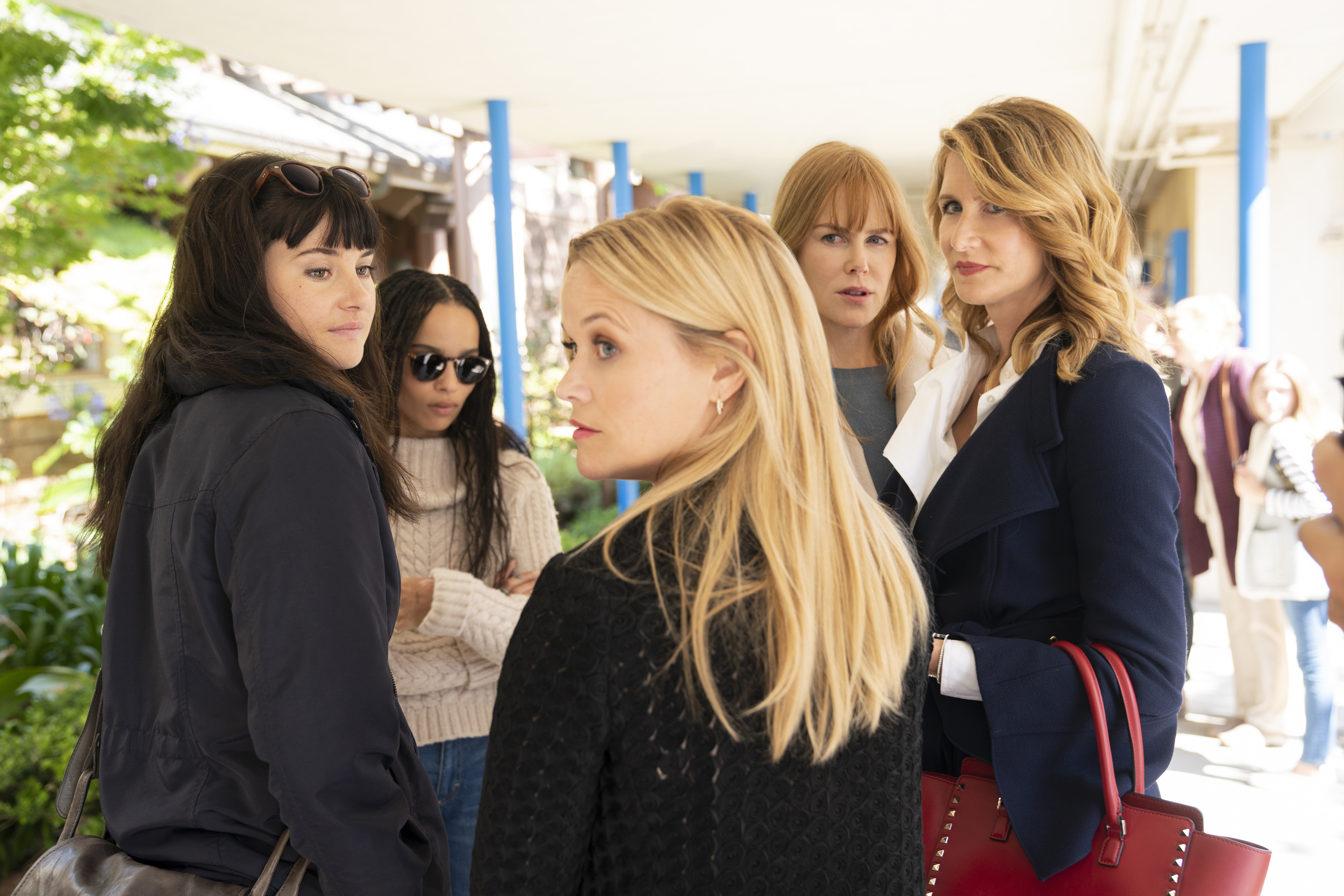
Big Little Lies
Photo credit: HBO

Big Little Lies
Series Finale: Season 3 likely coming
Should Have Been: Season 1

Stacked with a cast of Hollywood's heavyweights (Kidman! Witherspoon! Dern!) and talented up-and-comers (Kravitz! Woodley!), the series—based on Liane Moriarty's bestseller—crushed it its first season, as the Monterey mom squad tells lies of varying size and severity, both to themselves, their partners, and eventually the authorities. It was a decadently enthralling and often gruesome look at marriage, abuse, and trauma, ending with the "Monterey Five," as they'd come to be known, killing an abuser and seemingly getting away with it. Naturally, with its success came the hordes wanting a season two. It was delivered on June 9, 2019, with the addition of the heaviest of all Hollywood heavyweights—Meryl Streep. What could have been a continuation of the richly layered story of these five women became a meandering soap with a few gifable moments thanks to Dern and Streep. They should've just let them have their post-murder, softly filtered beach day and ended it there, but noooo. With another season likely coming, as season 2 ended with the five entering the police station, we'll see if BLL can find its stride again. —Alex Zaragoza

Mad Men
Series finale: Season 7 (aired May 2015)
Should have been: Season 5 (with some changes)

The actual series finale of Mad Men was perfect, but the two seasons leading up to it were totally off the rails, yet somehow still kind of boring—perhaps fitting for a (granted, very good) show that's about, uh, a bunch of white people in advertising. What was all that shit with Bob Benson, that so-goody-two-shoes-he-was-sinister brown-noser? They got us all worked up about him in season six, then didn't even make him a serial killer or anything fun like that. Do we even remember Pete's affair? Megan's miscarriage? They pale in comparison to the sexy, slow-burn drama of the first five seasons. At the end of season five, Don Draper should have turned out to be DB Cooper, Peggy should have stuck with Abe, and everyone else should have moved to a hippie commune or something. —Hilary Pollack

The O.C.
Series finale: Season 4 (aired Feb. 22, 2007)
Should have been: Season 3

The first two seasons of The O.C. were some of the best television of the aughts—or ever. What the Orange County-set show lacked in originality (a teen show about a good girl and a bad boy? And the bad boy is taken in by a rich family? Never heard that one before…) and diversity, it made up for in spades with witty writing, nuanced characters, a dope soundtrack, and sky-high entertainment value. The flaws of its protagonists were part of what made its cast come to life, and Marissa Cooper (Mischa Barton)—despite being a depressive brat—was crucial to its dynamic. Once they killed her off at the end of the third season, we suddenly realized that we actually don't need another entire season of Seth and Summer bickering, Ryan continuing to pick duds as his post-Marissa romantic interests, and Sandy and Ryan continuing to prove that marriage is all about weathering the storm, or something like that. Killing Marissa in a fiery car crash would have been a perfect decision if they had stopped right then and there. —HP

Dexter
Series Finale: Season 8 (aired Sep. 22, 2013)
Should Have Been: Season 4

One of the main thematic threads of Showtime's tragicomic serial killer drama Dexter was the idea that violence is cyclical: that traumas are borne out across generations; that children must pay for the sins of their fathers. But that message is conveyed clearly and movingly enough in the early run of the show, before the incredibly on-the-nose moment when Michael C. Hall's titular character finds his child playing in a pool of his wife's blood, just after it seemed that the killer of killers was finally going to leave Florida and escape the life that his own father had set him up for. The show never really figured out what to do without Dexter's love interest Rita as a moral center for him to return to, and in the seasons after it ratcheted up the intensity of its Big Bads until they became comic book villains (Season 6 is especially eye-rolly, casting Colin Hanks as a religious fanatic with a penchant for disemboweling people in ways evoking the Book of Revelation.) Also, if you allow Dexter his happy ending moments before the close of Season 4, you avoid the incest plotline, which is always good. —Colin Joyce

Skins (UK)
Series finale: Season 7 (aired Aug. 5, 2013)
Should have been: Season 2

Over 11 years, MGMT's seminal work "Time to Pretend" has been used in dozens of video games, commercials, and trailers, but undoubtedly its most perfect usage was the end of Skins season two, which should have absolutely been the show's finale. After two seasons of death and loss on the drug-addled British teenage drama, the original UK version of the episode "Final Goodbyes" culminates in stoner Sid (Mike Bailey) flying across the Atlantic to go after manic pixie dream girl Cassie (Hannah Murray), and making his way through New York as "Time to Pretend" plays; it's frantic, sad, and hopeful all at the same time. The episode's very final shot is a direct callback to the show's first, save for a character swap. If everything had stopped there, Skins would have been the most perfect circle, without the nonsensical shitshow of gangs, evil psychiatrists, and insider trading that came in the following five seasons—and don't even get me started on the American reboot. —BM

Monday Night Raw
Series finale: Still airing
Should have been: January 4, 1999

Before the WWE got the “F” out of their name and grew into a publicly traded company with ties to Trump, the Saudi Royal family, and the mayor of Knoxville, Tennessee, its ratings peaked during the more violent and sexually explicit Attitude Era. It was a period best known for the rise of wrestlers like “Stone Cold” Steve Austin and The Rock, but its greatest moment (and the should-be series finale) starred Mick Foley, a sweatpants-wearing underdog best known for being thrown through a table. The definitive Attitude Era championship match headlined a 1999 episode of Monday Night Raw—a 9-minute, no-disqualification brawl. Just as The Rock was about to retain his title with the help of generous outside interference, Austin’s glass shattered to what was likely the loudest crowd pop in wrestling history. He cracked a chair over The Rock’s head (an unthinkable move today) and draped Foley over him for his first, unlikely title win. If Monday Night Raw had ended that fateful night in 1999, the villainous Rock wouldn’t have stolen the belt back three weeks later, Linda McMahon might not have a cabinet seat, and Gawker might still be a website. —Aaron Shapiro
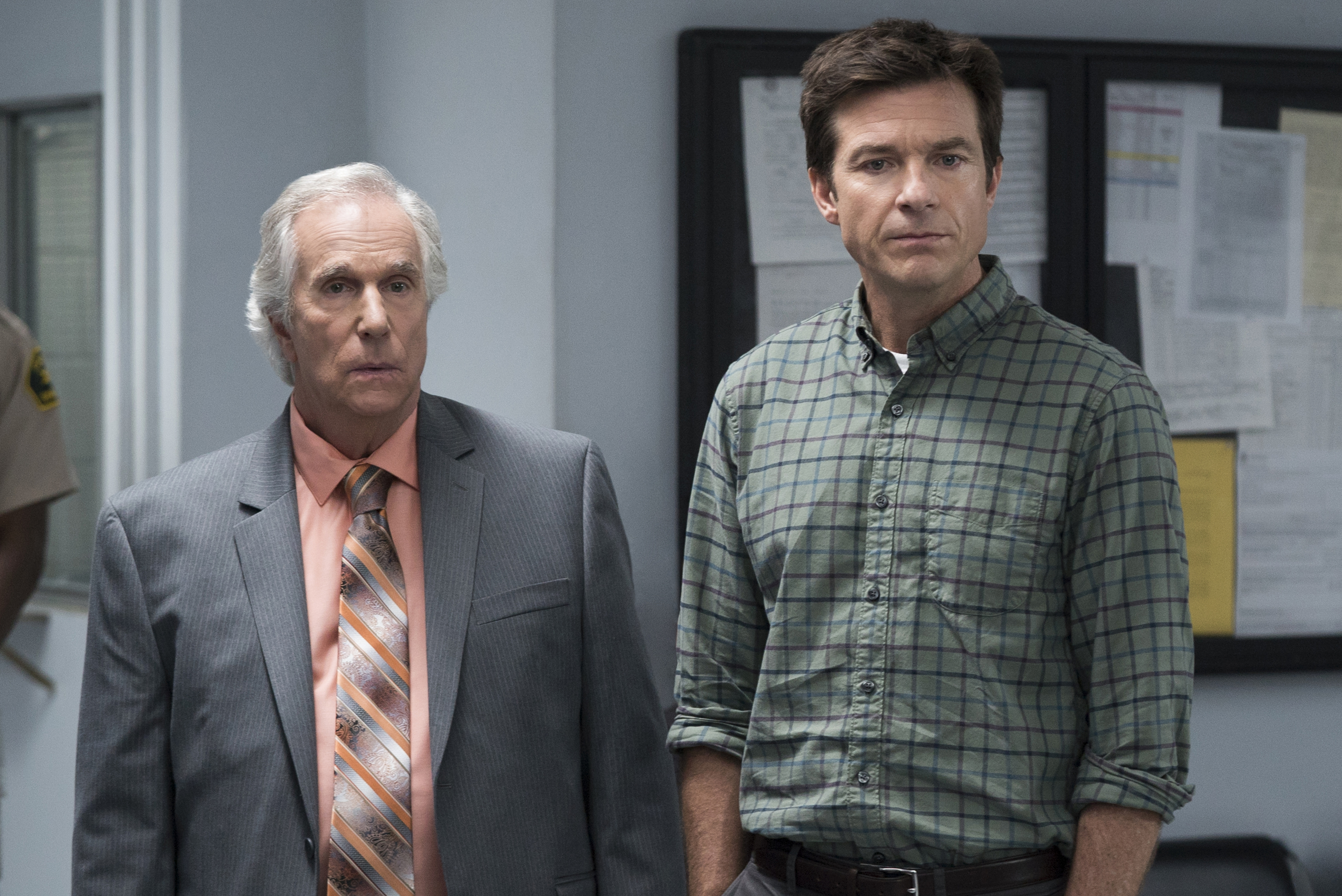
Arrested Development
Photo credit: Saeed Adyani/Netflix

Arrested Development
Series finale: Still running? Maybe?
Should have been: Season 2

I refuse to acknowledge seasons four and five of Arrested Development, and, if we're honest, the majority of season three is dicey too. The ableist plot involving Charlize Theron as a "mentally retarded female" is questionable for sure, as are adopted son Annyong's lowkey racist deportation and spying storylines. Arrested Development should have ended with its second season, when the show was absolutely at its peak. The first two seasons are near perfect, with jokes so layered that they get better with every rewatch, plus hilariously awkward plotlines, like Tobias's Mrs. Featherbottom, his obsession with the Blue Man Group, and the cringey romance between first cousins Maeby and George Michael. At the end of season two, the cousins kiss, the model home collapses around them, and the Bluth family fights outside a courthouse. The show is weird; that would have been a fittingly weird finale, and we would have skipped all the bad things that happened thereafter. —BM

Girls
Series finale: Season 6 (aired April 16, 2017)
Should have been: Season 4

Girls splashed into the TV world in 2012, promising to portray millennial life in New York City as realistically as possible. But creator Lena Dunham might've taken that too far in some ways, following the main characters through their twenties at a glacial pace that practically mimicked real time, while whiffing in others, like that the show's version of New York seemed to be entirely missing people of color. By the final season, it became frustrating to watch characters struggle with the same flaws—like Marnie Michaels's narcissism—they'd been battling since the beginning. When the main characters start to drift apart and Shoshanna decides she doesn't need to be friends with the other three leads it is, again, pretty realistic. But no one really wants the main characters of a landmark TV show to stop being friends altogether. We really just wanted a compelling show that accurately depicted the lives of young people trying to find their place in the world. Girls nailed that, until it didn't. —Taylor Hosking

Homeland
Series finale: Still airing
Should have been: Season 4

The first season of Homeland is near-perfect television. It's a tense and edgy political thriller starring Claire Danes as Carrie Mathison, a CIA agent assigned to the case of Damian Lewis’s Nicholas Brody, a U.S. Marine who was captured and turned by Al Qaeda. Every episode in its early seasons boasts increasingly higher stakes, and it's a thrilling watch. But after a while, things just continued to escalate without ever settling down. By the time a disjointed season 3 rolled around, Brody was no longer an Al Qaeda operative but stuck in a South American hideout getting hooked on heroin before, confusingly, working with the CIA again. Season 4 managed to bring it all back for what's arguably the show’s strongest collection of episodes yet, but Homeland never matched its initial peak. Josh Terry

The Office
Series finale: Season 9 (aired May 15, 2013)
Should have been: Season 5

The Office is undoubtedly one of the most brilliant sitcoms of all time, led by the incomparable Steve Carell as the bumbling, unknowingly offensive Michael Scott. Over the course of its tenure on NBC, the show continued to up the cringe factor, but Pam and Jim's love story was the heart of the show, as were the good people of Dunder Mifflin. They were just trying to get through their day without being attacked by a bat, hit by a car, or kidnapped and taken to rehab by their boss—and that was just Meredith! Unlike the British series that inspired it, which did two seasons and two Christmas specials, the American version of The Office ballooned into nine unnecessarily long seasons (most seasons had over 22 episodes). While there's an argument to be made that the show should have ended when Carell left the show towards the end of season 7, it in fact should have ended much sooner. The show started to take a dip around season 5, and while the following four seasons produced some fantastic episodes and moments (Michael falling into the koi pond, the absolutely painful "Scott's Tots"), the storylines and characters went loopy and got increasingly annoying (Will Ferrell's brief stint as the new boss, Dunder Mifflin going to Saber). It should have ended at season 5, Michael and Holly should have gotten together once and for all, and the beloved series could have ended on a high note. —AZ
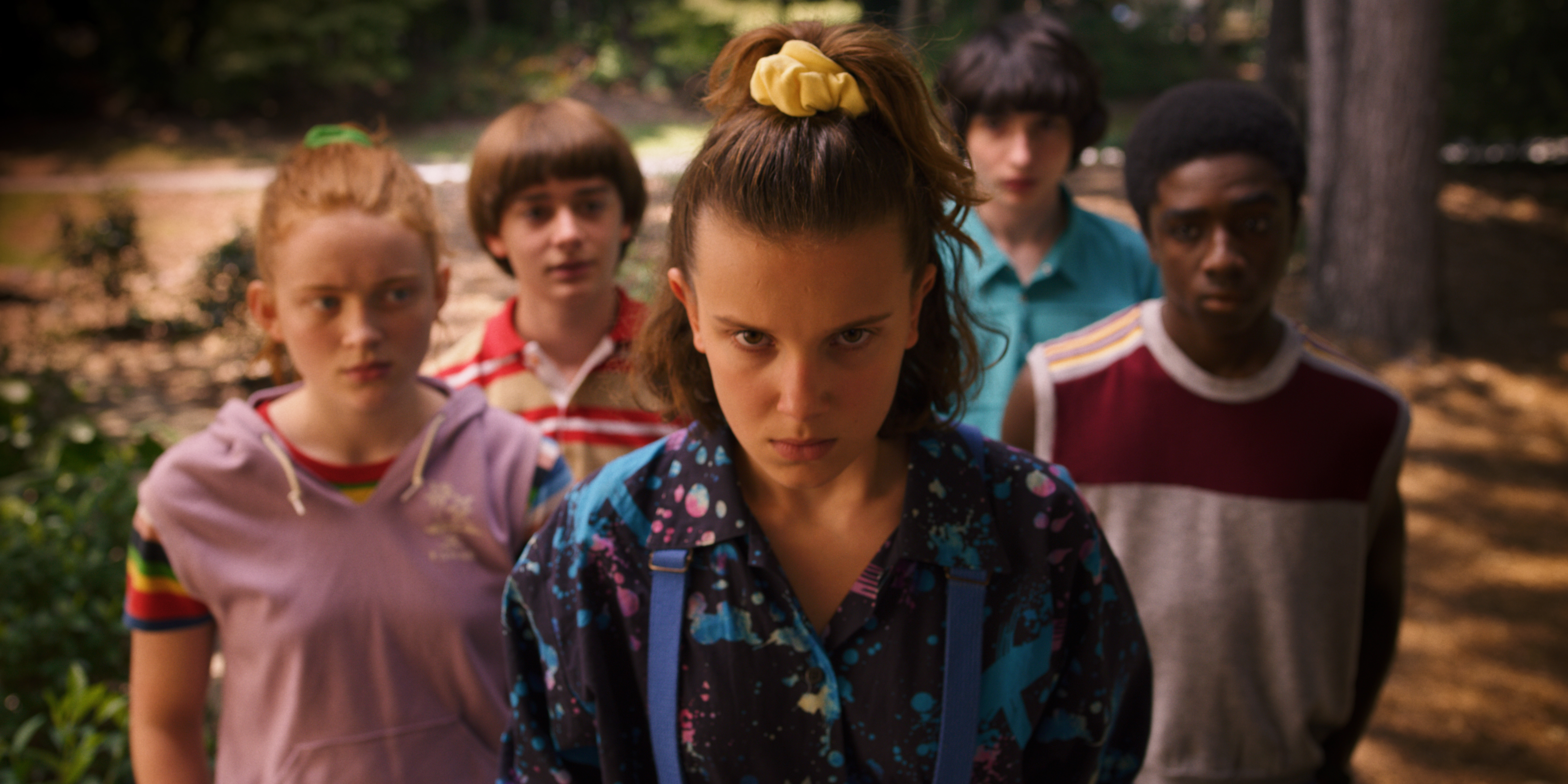
Stranger Things
Photo credit: Netflix

Stranger Things
Series finale: Fourth season confirmed
Should have been: Season 2

The third season of Stranger Things, Netflix’s sci-fi darling, raises the question of where and when gleeful pandering to our collective nostalgia starts to surpass the plot itself—and consequently, at what point should the Duffer Brothers, the series creators, call the whole thing off in favor of a tighter ending? Will Byers isn’t the same kid after he’s made it out of the Upside Down at the end of season one, and a follow-up season that finds the gang defeating the Mind Flayer again and closing the gate for good feels organic and warranted. But to reopen that same plot and literally reopen the same portal (even if you can blame Russia this time) automatically lowers the narrative stakes of the show. Sure, it’s fun to see the cast navigating the 80s—teenage lust! Malls! Geopolitical tension! Scrunchies!—but you can only save Hawkins from a flesh-eating demon from another dimension so many times before your previous victories start to lose their emotional impact, even if you kill-but-very-obviously-not-kill a beloved character this time around. Wrapping it up at the Season 2 is generous. Meredith Balkus

The Wire
Series finale: Season 5 (aired March 8, 2008)
Should have been: Season 4

If The Wire had ended after its flawless fourth season, it would be the greatest series HBO has ever made. To be fair, it's still the greatest series HBO has ever made—even if that fifth season took the naturalistic series and pushed it deep into screwball territory, complete with ragged cop Jimmy McNulty's bonkers fake serial killer that feels more like some drunk dream he had after passing out with Bunk at the train tracks than an actual Wire narrative. But all season 5 issues aside, there's a bigger reason that creator David Simon should have just called the show at that season 4 finale. If the final shot of the series was Namond's quiet moment while he stared at his new neighborhood, safe and quiet and hopper-free, before going inside for breakfast with Bunny, the show could've actually ended with something it had precious little of during its run: hope. River Donaghey

Family Guy
Series finale: Still airing
Should have been: Your 13th birthday

Remember how it felt to be 12 years old? You were growing, you were changing, and the world was at your fingertips, if by “world” we mean “the newfound joys of masturbation.” Family Guy was still funny. Remember when Peter fought that giant chicken? Oh, how you laughed. But somewhere around your 13th birthday, the laughter waned. Your child brain became a teenage brain, more aware and finely-tuned and able to realize these purposefully offensive and awful jokes are actually just terrible and if you see another stupid aside you will lose your shit for good. Let's not even get started on Quagmire's deeply unconscionable sexuality. If you're too old to crawl into bed with your parents, you're too old to enjoy Family Guy. Sorry. —RD

Felicity
Series finale: Season 4(aired May 22, 2002)
Should have been: Season 2

Poor Felicity. The series started out strong: bookish, curly-haired Felicity Porter (Keri Russell) impulsively follows her high school crush, Ben, to NYU after he wrote a thoughtful note in her yearbook. And by "strong" I mean somewhat questionable and completely stalker-ish. But 2002 was a different time, and the show's premise was romantic enough for the teen WB crowd, who was already invested in the verbose high schoolers on Dawson's Creek. Once the love triangle between Ben, Felicity, and resident advisor Noel got going, things got hotter, albeit in an extremely subdued, Sarah McLachlan-soundtracked sort of way. Then, in season 2, Felicity decides to cut off her long, gorgeous locks in a show of independence and ends up looking like 1999-era Justin Timberlake. Viewers freaked out, ratings took a nosedive, and the hair faux pas became a pop culture punchline. The backlash was ridiculous, and actually pretty abhorrent. Still, the show never quite recovered, and writers made very dumb decisions with the story, like an odd time-jump finale which seemed like a precursor to what would come later from creator J.J. Abrams. They should've just taken the L and ended at season 2. —AZ

Lost
Series finale: Season 6 (aired May 23, 2010)
Should have been: Beats me, but not six seasons.

Speaking of J.J. Abrams, his ABC sci-fi drama Lost was a monster in many respects: it boasted a cast of what felt like 400 actors, featured actual "smoke monsters," and depicted other entities terrorizing the survivors of a plane crash who are stranded on a not-so-deserted island. Its strange, mythological storyline ended with the big reveal that the characters had maybe been in purgatory the whole time(?). It was a ratings beast (the premiere episode of its final season drew 12.1 million viewers). It's hard to say where Abrams and his partners Damon Lindeloff and Jeffrey Lieber were going with the story, because it went in a million directions, sometimes nonsensically, over its six-season run. By the end, it all became so convoluted with its multiple timelines, twisted allegories, and fantastical character arcs (John Locke becomes the Smoke Monster!) that it was hard to follow. I'm not actually sure where it could have ended, because it's so intertwined that some storylines wouldn't be tied up. It just didn't need to last so long. The story could've been less complicated and done in four seasons, and saved us all the trouble of wondering if the Oceanic Six were actually dead the whole time. —AZ

The Handmaid's Tale
Series finale: Still airing
Should have been: Season 1

Hulu's dystopian drama, based off Margaret Atwood's book, came in hot and extremely timely, premiering five months after the election of Donald Trump. The series follows June/Offred (Elisabeth Moss) as she lives as a handmaid in the totalitarian, extremist Christian country of Gilead, where women are stripped of many of their human rights (they are brutally punished for reading, for example) and handmaids are forced to help repopulate the world's dwindling population in a monthly "ceremony" where they're raped by commanders in the presence of the commanders' wives. Women across the globe have taken to protesting in red handmaid robes and white bonnets, particularly when reproductive rights have been attacked. After season 1, the show had to go off-book, choosing to up the horror-factor and become increasingly more race-blind in its storytelling. It should've stayed a one-season miniseries instead of an ongoing masochistic nightmare disguised as entertainment. —AZ

Cops
Series finale: Still airing
Should have been: Never in existence

The docuseries premiered in March of 1989, and follows police officers in various cities across the U.S. as they performed their duties. In the show, a camera crew films officers—whose departments have, for the most part, partnered with the producers—as they conduct their daily rounds. There are a lot of questions to be asked about the ethics of portraying people in some of their most vulnerable moments—and questions have been raised about the ethics of the show's release policy—but fundamentally, a show that glorifies cops while omitting any suggestion of fallibility seems misguided at best. This show should have never happened, and it most definitely shouldn't still be on when police officers are killing Black and brown people at alarming rates in this country and facing minimal, if any, consequences for it. —AZ
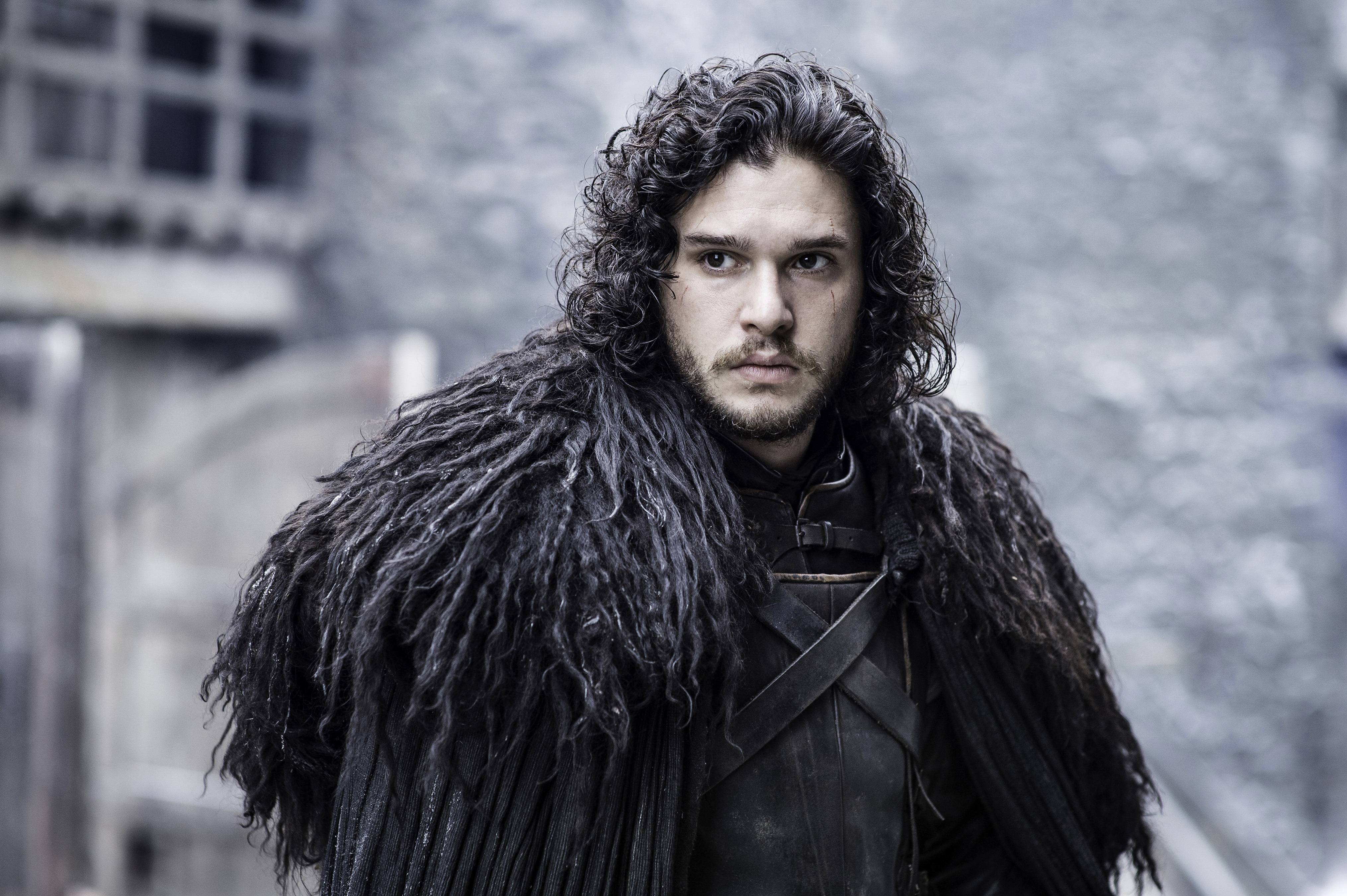
Game of Thrones
Photo credit: HBO

Game of Thrones
Series finale: Season 8 (aired May 19, 2019)
Should have been: Season 8

There's an easy case to be made that Game of Thrones should have just stopped when they caught up to George R.R. Martin's source material, and never gone off-book in season six. The show changed dramatically in the last couple seasons, wrecking the show's careful pacing and trading out the palace intrigue for interminably long CG action sequences. But there are still some gems in season six and seven. If we're trying to choose a better ending for the series, there's no better choice than the season eight episode "A Knight of the Seven Kingdoms." It's a perfect return to form for the series, returning to the interpersonal focus that made the early seasons so great. Did we need to actually see the Battle of Winterfell? Did we ever actually see it at all? Give us a nice cliffhanger ending and we'll be debating whether it means that all the humans actually died, Sopranos-style, for years. At least that's better than King Bran. —RD

Dawson's Creek
Series finale: Season 6 (aired May 14, 2003)
Should have been: Season 4

Dawson's Creek rang in a new era, not just for the former WB network, but for teen soaps as a whole. Building off the earnestness of the short-lived My So-Called Life and Party of Five, the success of Dawson's Creek led to One Tree Hill, Gilmore Girls, and other late 90s/early-mid 00s dramas revolving around extremely loquacious and eloquent teenagers facing real world (and often first-world) problems. The love rectangle between best friends Dawson and Joey, bad-boy-with-a-heart-of-gold Pacey, and new girl in town Jen was captivating viewing for tweens and teens desperate for an exciting love story in their own lives. But as it goes with high school-set shows, at some point the characters must go off to college. This often leads to the awkward, puberty-esque transition of turning the teens we grew to love into adults. With Dawson's Creek, the characters were at their most interesting, even if often unlikeable, when they were in high school. They should've kept them there, ending the series in season 4 with their graduation, and of course with Pacey and Joey together. No other outcome would've been acceptable. —AZ

Gilmore Girls
Series finale: Season 7 (May 15, 2007)
Should have been: Somewhere around season 5

It’s fun now to recall the series finale of Gilmore Girls: Stars Hollow throws Rory a going-away party because she’s accepted a job reporting on then-Senator Barack Obama’s 2008 presidential campaign. When Rory’s mother and grandparents ask how long she’ll be gone she tells them, “It could be two months, it could be two years if Barack does well.” Quaint! Still, it should have never happened, because Gilmore Girls should have ended much sooner. When? I’m not sure. Gilmore Girls peaked in seasons 2 and 3; but unlike other shows of its ilk, it stayed reliably good even when its main character went off to college. Gilmore Girls’ descent really begins somewhere in the middle of season 5, and it’s a slow burn thereafter, culminating in season 7, which was written and produced by a new team following a botched contract negotiation that led the show’s creators to jump ship. Don’t get me wrong: All 153 episodes of the original Gilmore Girls series are precious to me, and I’ll continue watching every one of them until I die in an apocalyptic climate event. But there could be like, 53 fewer. Marie Solis

House of Cards
Series finale: Season 6 (aired Nov. 2, 2018)
Should have been: Season 5

Even before Netflix cancelled House of Cards amid sexual assault allegations against Kevin Spacey, the show should have ended on merit. At its fifth season, the show just got bad. The premise of House of Cards (i.e., Spacey as politician Frank Underwood who is also a murderer) was never very believable, unless you follow unhinged conspiracy theories. But it made the irredeemable fall from serious drama to absurd soap when wife Claire kills her lover Tom in the middle of… having sex? And then it was back to flexing America's global power as usual. That said, it was a drama-filled season as Claire and Frank fought for political power, and it resulted in a perfect last scene. Claire breaks the fourth wall and says, "My turn," and you realize that she's just as deranged as her husband. Given all the manipulation and meddling we'd seen them both capable of, leaving Claire's time as President purely in our imaginations would have been much more dramatic—and scary—than seeing it play out in season six. —BM

2 Broke Girls
Series finale: Season 6 (aired April 17, 2017)
Should have been: Probably never

The moment it appeared on 2011 TV screens, CBS' shockingly cringe attempt at capturing hipster culture and audiences was just bad from the get-go. It follows two twenty-somethings working in a Williamsburg (of course) diner: one a sass-mouth, no-nonsense working class hustler; the other a former rich girl forced into the service industry after her daddy gets mixed up in a Ponzi scheme. They move in together, keep the rich one's horse as a roommate, start a cupcake business (remember in like, 2008, when everyone was into cupcakes? This was a very long time after that), then start a cupcake t-shirt business (whatever that is), and then, I dunno, other stuff happens. The jokes were cheap and relied on stupid, offensive stereotypes. All in all, it's the CBS idea of what hipsters are like (so much sass!), and therefore incredibly embarrassing. This show should have never existed, let alone lasted six painful seasons, so I suppose if I have to choose when it should have ended, I would say before it even began. —AZ
Russian Doll
Photo credit: Netflix

Russian Doll
Series finale: Season 2 confirmed
Should have been: Season 1

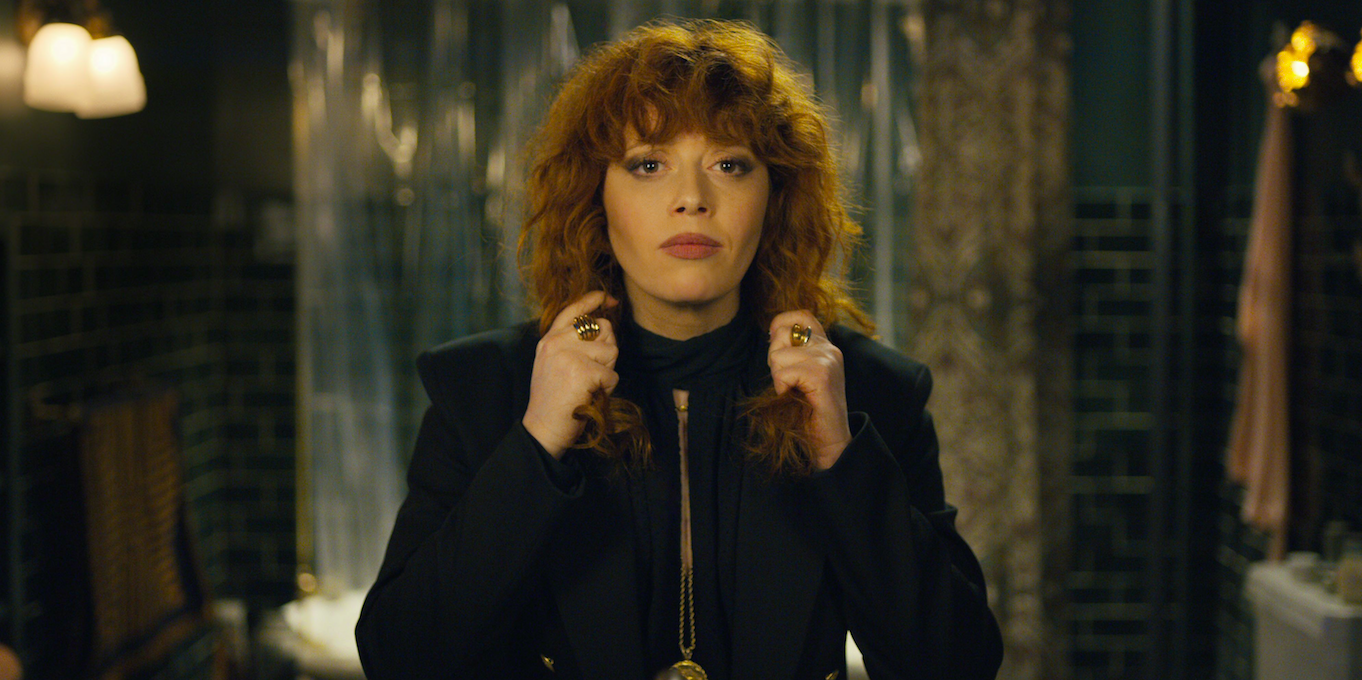
The first season of Russian Doll felt so complete that it could've been a day-long movie disguised as an eight-episode Netflix series. Creator and series lead Natasha Lyonne managed to keep the reason for her character Nadia's repeated deaths under wraps until the final, dramatic reveal, while in retrospect, the clues were hiding in plain sight. In doing so, she created a masterpiece that allows audiences to experience what it feels like to suffer from suppressed demons. The season wrapped up in a neat, satisfying bow. But now that season two is apparently in the works, it's hard to imagine how Nadia could go through a similar journey again, given all that she's learned about herself in the first season. And if the show shifts its attention to another main character or an anthology, like writers apparently have considered, it would be hard for them to pull off the same bait and switch mystery. —TH

Orange is the New Black
Series finale: Season 7 (aired July 26, 2019)
Should have been: Season 5

OITNB certainly started off strong, following the story of Piper Chapman as she enters an all-women's correctional facility after being caught working for a drug runner. The show is based on the real experience of Piper Kerman, a middle-class white woman, which, on a larger sociocultural scale, is telling of whose stories we choose to tell when it comes to things that predominantly affect Black and brown communities. Still, the show was a fun and fascinating look at the lives of incarcerated women, at least for a while. But the show was unable to evolve past Piper's release, and killing off fan favorite Poussey Washington (Samira Wiley) drew audience and even cast outrage. They should've killed off the whole series in season 5, letting Litchfield Penitentiary's inmates take over the whole damn place. —AZ

Sign up for our newsletter to get the best of VICE delivered to your inbox daily.


from VICE https://ift.tt/2ZLUHaa
via cheap web hosting

Hurricane Dorian Has Killed at Least 5 People in the Bahamas and Now It 'Won’t Budge'

Hurricane Dorian continued to cause “extreme destruction” to the Bahamas on Monday with at least five people confirmed dead as a result of the storm.

The National Hurricane Center had no better news for the Bahamas on Tuesday morning, saying “Dorian won’t budge” with the southern eyewall of the storm “firmly planted over the island of Grand Bahama.

While the storm was downgraded to a Category 3 hurricane on Tuesday morning with sustained wind speeds of 125mph, the NHC warned that gusts of up to 155mph and storm surges of up to 18ft above normal were expected.

Dorian slammed into Great Abaco island Sunday as a Category 5 storm with sustained wind speeds of 185mph, causing widespread devastation and killing at least five people.

“We are in the midst of an historic tragedy,” Bahamian Prime Minister Hubert Minnis said. “The devastation is unprecedented and extensive.”

READ: Hurricane Dorian has unleashed 'pure hell' on the Bahamas

Officials have been inundated with distress calls from people whose homes have been flooded or blown away, but as the storm continues to pummel the islands, they said there is little they can do to help those in trouble.

“We simply cannot get to you," Police Chief Samuel Butler told a local radio station Monday.

As many as 13,000 homes may have been destroyed or severely damaged in the Bahamas according to the International Federation of Red Cross and Red Crescent Societies.

With the storm moving at just 1mph, meteorologists are struggling to predict where or when it will hit the eastern coast of the U.S.

Dorian could still make landfall on the Florida coast, but evacuations have also been ordered in parts of Georgia and the Carolinas. While the storm has been downgraded to a Category 3 storm, with winds of 120mph, officials have been warning Florida residents that Dorian could still cause extensive damage.

What happened on Monday?

“Many homes, businesses and other buildings have been completed or partially destroyed,” Minnis said. “Downtown Grand Bahama is under three feet of water, including the ground floor of its hospital and the prime minister’s office.”

Minnis said the death toll had reached five, but officials say many more people are unaccounted for.

The full extent of the damage caused to the islands won’t be known for several days, until the storm passes and planes can survey remote parts of Great Abaco and Grand Bahama.

Thousands of residents have been trying to contact emergency services, but many have been unable to get through.

Instead, they have been phoning local radio stations, with one saying it received more than 2,000 distress messages. These included reports of a five-month-old baby stranded on a roof and a grandmother of six who cut a hole in the roof to escape rising floodwaters.

The police urged people to remain calm and share their GPS coordinates, but reiterated that it could be at least another day before they could send a response.

The Caribbean Disaster Emergency Management Agency, a relief group based in Barbados, said it may not be able to visit the islands until Wednesday afternoon.

READ: Why Hurricane Dorian's conditions are nearly perfect to devastate Florida

Where will Dorian go next?

According to the National Hurricane Center on Tuesday morning, Dorian was stationary just north of Grand Bahama Island, having moved just 12 miles on Monday.

The center said the storm is expected to move north-northwest through today and in a northerly direction on Wednesday, followed by a turn to the northeast on Thursday.

“On this track, the core of extremely dangerous Hurricane Dorian will continue to pound Grand Bahama Island today,” the center said. “The hurricane will then move dangerously close to the Florida east coast late today through Wednesday evening, very near the Georgia and South Carolina coasts Wednesday night and Thursday, and near or over the North Carolina coast late Thursday.”

How are preparations going on the east coast?

The city of Stuart in Martin County, Florida is already experiencing the impact of Dorian. It has been lashed with heavy downpours and strong, tropical storm-force winds. Some transformers have been blown, causing power outages.

While the storm remains stationary over the Bahamas, a hurricane warning was extended to about 240 miles of the Florida coast on Monday afternoon — from just north of West Palm Beach to the beach adjacent to Jacksonville.

In Martin County, where a mandatory evacuation of the barrier islands has been in place since Sunday, the causeway that connects the islands has been shut, and some hurricane shelters are no longer accepting evacuees.

Officials and residents in states north of Florida are getting increasingly worried about the storm’s predicted path, and on Monday people in Georgia and as well as the Carolinas were ordered to evacuate.

“We know that we cannot make everybody happy, but we believe that we can keep everyone alive,” Gov. Henry McMaster of South Carolina said at a news conference Monday.

Trump vs. the National Weather Service

Trump on Monday continued to claim that Alabama was at one point in danger of being impacted by Dorian, despite repeated denials by his own weather service.

Having initially claimed in a tweet and subsequently a press conference on Sunday that Alabama could be hit by Dorian, Trump tweeted on Monday night that “under certain original scenarios” Alabama was in danger.

"I suggested yesterday at FEMA that, along with Florida, Georgia, South Carolina and North Carolina, even Alabama could possibly come into play, which WAS true. They made a big deal about this ... when in fact, under certain original scenarios, it was in fact correct that Alabama could have received some 'hurt.' Always good to be prepared!" Trump wrote.

However this contradicted comments Trump made during Sunday’s press conference, when he said the danger to Alabama “just came up, unfortunately.”

At no point did the National Weather Service or the National Hurricane Center suggest that hurricane-force winds could reach Alabama and the state was not mentioned in the latest updates from the services on Tuesday morning.

Cover: This GOES-16 satellite image taken Monday, Sept. 2, 2019, at 16:40 UTC and provided by National Oceanic and Atmospheric Administration (NOAA), shows Hurricane Dorian, left, churning over Bahamas. Hurricane Dorian hovered over the Bahamas on Monday, pummeling the islands with a fearsome Category 4 assault that forced even rescue crews to take shelter until the onslaught passes. (NOAA via AP)


from VICE https://ift.tt/2LjmhHO
via cheap web hosting

'South Park' Made It Cool Not to Care. Then The World Changed

In the summer of 1999, with only two and a half seasons of the show under their belt, Matt Stone and Trey Parker went to the big screen with South Park: Bigger, Longer & Uncut. In doing so, their lewd, low-budget cartoon about a group of foul-mouthed elementary school boys took a step that their rivals The Simpsons would wait nineteen seasons before attempting. It was a ballsy move. Looking back, it was typical South Park. "We're in the business of making people go, 'What the fuck is this?'" Stone and Parker told Rolling Stone in 1998.

On its release, South Park: Bigger, Longer & Uncut took home almost four times its budget, received overwhelmingly favorable reviews, and snagged an Oscar nomination for Best Original Song. Something about its refusal to bow to convention—with its intentionally shoddy animation style and irreverent sense of humor—made it a perfect fit for the MTV generation. Playing to a post-boomer audience defined by cynicism and a sort of directionless anti-authoritarian spirit, South Park rolled up with a demonic glint in its eye and a raised middle finger for everyone and everything. The crowd went wild.

As the show chugs on into its twenty-second season, its cultural legacy remains a source of contention for critics. Some, such as Brandon Katz at the Observer, have argued that "you're an idiot" if you don't appreciate South Park's unflinching satire of contemporary culture—and that the movie's satire of moral panic and media scapegoating is more relevant today than ever. Others, observing the polarized political climate of Trump's America, have accused the show of raising a generation of trolls, and even of laying the foundation for the rise of the alt-right.

20 years after Bigger, Longer, Uncut hit theaters, South Park remains a battleground in America's culture wars, but not exactly for the same reason that it became one in the past: Back in 1999, South Park's insistence on making fun of everyone and everything felt like an exhilarating assertion of personal freedom in an entertainment landscape that was being censored along increasingly hardcore and conservative lines. But in a world where conservatives have increasingly positioned themselves as the harbingers of free speech, leveraging the right to speak one's mind as a justification for violating the personal freedoms of others, the true legacy of South Park's no-fucks-given attitude becomes a little more difficult to parse. In fact, it can start looking a little dangerous.

To go back to the episode where it all began, "Cartman Gets an Anal Probe" announced the show's mission to have fun and raise hell. Season one continued on in pretty much that vein: Elephants made love to pigs, starving African kids got accidentally shipped to Colorado, and Satan's son got picked on at South Park Elementary. There seemed to be no particular agenda to any of these decisions; they were just wacky, kind-of-unacceptable things that were sure to get a laugh.

At first, those fart jokes and curse words felt like an act of political rebellion. The South Park creators grew up in the seventies, a decade when the Supreme Court deliberated on the serious moral ramifications of George Carlin's "Seven Words You Can Never Say on Television." By the turn of the millennium, rappers were being arrested on obscenity charges, and the Parents Television Council was pressuring the government into censoring violence, profanity and sexual content far more strictly. From the start, the PTC berated South Park for everything from overuse of the word "shit" to encouraging sex education. In this environment, Parker and Stone were genuine underdogs, two young guys fresh out of film school making an offbeat cartoon for a fledgling comedy network. Without money or fame to protect them, every risk they took put their careers on the line.

For the most part, their risks paid off. "It's crazily more permissive than when we started," Parker told the Guardian in 2014. "The standards were much, much higher when we started out." Bigger, Longer & Uncut occasioned a protracted battle between its creators and both the Motion Picture Association of America and Paramount Studios. Stone and Parker were ready to fight tooth and nail for every curse word, sex act, and decapitation in their movie, producing this legendary memo in which they gleefully denoted the particular sex acts that they felt most passionate about including. Their refusal to take the MPAA's guidelines seriously ultimately served to confound the censors so much that the film actually became dirtier than it had begun: asked to remove the word "hell" from the film's title (South Park: All Hell Breaks Loose), Stone and Parker offered the far filthier one that it goes by today.

The show skewered parental panic about sex in season five ("Proper Condom Use") and drugs in season six ("My Future Self 'n' Me"), urging parents to eschew scare tactics in favor of calm, realistic conversation. In its episodes about immigration ("Goobacks"), religion ("Trapped in the Closet"), and pornography ("The Return of the Fellowship of the Ring to the Two Towers"), it was essentially asking the same thing of the world at large: to approach difficult subjects head-on, even if that meant making childish jokes about them. Its enemies were anyone who impeded that.

And yet, it wasn't long before the limitations of that "just let people have fun" ethos began to show. South Park's third season kicked off with Rainforest Shmainforest, a send-up of environmentalists and their prettified vision of the natural world. Its depiction of activists was highly recognizable and undeniably funny, but, by throwing out the very idea of environmentalism along with its more annoying proponents, it hinted at an outlook that would come to define the show from then on.

"I mean, it really is that we take an issue, and we sort of always have two sides about to kill each other over it and the boys in the middle doing fart jokes and saying, you know, who cares?" Parker told NPR back in 2010. "This is, you know, you're both crazy." In a way, that both-sidesism—the idea that at the heart of every issue lie two equally wrong, equally annoying parties—was symptomatic of the show's proudly childish point of view.

Being a kid keeps you on the fringes, which can give you an insightful, unclouded view of the injustices in the world. But it also means you have no real responsibility for what you say or do—a stance that seems especially unsurprising given that the show was created by two straight, cisgender, (now incredibly wealthy) white men."I spend shockingly little time thinking about real-world stuff," Parker told Rolling Stone in 2007, "As far as I'm concerned, I've got a computer, the Internet, an Xbox and PlayStation 3, so fuck off." When you see the world from that childish vantage point, it's easy to de-prioritize anything beyond your own enjoyment of life. Political disputes are just grating background noise that have no real impact upon their lives beyond distracting them from their video games.

Over time, the show gradually leaned more into its role as the clown prince of no-sides-taken satire. Sexual harassment laws in season three and smoking bans in season seven received the same treatment as environmentalists, and then season nine saw a reluctant Stan being forced to take part in a mascot election between a giant douche and a turd sandwich. That's South Park's view of politics in a nutshell: Every debate is between a douche and a turd, so calling bullshit on both of them is the most enlightened stance you can take.

This equal-opportunity offender ethos, one claiming to make fun of everyone equally and thereby discriminate against no one, is hardly exclusive to South Park. Plenty of edgy late-nineties/early two thousands artists, like Ricky Gervais and Seth McFarlane, prided themselves on railing against the censors in their early day but now find themselves under fire for their reliance on lazy stereotypes and their insistence on making dehumanizing trans jokes. After all, a worldview like that that could only really come from a life enshrined in privilege. Racism, sexism, and homophobia simply aren't part of these men's lived reality, so the battles surrounding it have never been fully real to them. The show has even acknowledged this in episodes like "With Apologies to Jesse Jackson," where Stan slowly comes to realize that he will never fully appreciate what it feels like to experience racial discrimination.

In spite of this, Parker and Stone have remained unable or unwilling to differentiate between the restrictions that powerful institutions like the MPAA and television networks impose on free speech and that of the contemporary discourse that seeks to shield marginalized communities from further marginalization. They simply hear someone, once again, telling them "You can't say that."

This outrage with respect to "PC culture" has been the centerpiece of South Park's last few series. Season nineteen brought us the PC Principal: a muscled frat bro on a mission to violently impose "politically correct" behavior on the residents of South Park. Several of them quickly join forces with him, delighting in the opportunity to peacock their newfound "wokeness" and punish those who fail to keep pace. Later episodes introduce literal "PC cry-babies," upset by everything without understanding why. The takeaway is simple: Political correctness has little to do with empathy and everything to do with "virtue signaling,"and a sort of tribalistic zeal for punishing those who don't conform.

In an interview with Vulture shortly after season nineteen aired, a reporter asked Stone and Parker whether they were at all concerned that their anti-PC stance aligns them with Donald Trump. While Stone was quick to point out that he and Parker "don't think (they) probably agree" with the President's views, he was equally eager frame political correctness as a phenomenon that makes people "afraid to laugh."

This is not to say that the show suddenly became right-wing—those seasons still devoted ample airtime to ridiculing Trump, white supremacists, and gun culture. But its overriding opposition to the idea of ever conceding any amount of personal freedom to accommodate others aligns it with some of the more venomous ways that politicians and pundits have weaponized the free speech argument in contemporary discourse.

Fox News has, of course, long thrived on getting people mad over the fact that you "can't say anything anymore." 4chan began as a place for people to post disturbing things that made them laugh and evolved into a breeding ground for GamerGate, the alt-right, and white nationalism. More recently, YouTuber Steven Crowder has positioned himself as a brave defendant of free speech thanks to his refusal to stop employing racist and homophobic rhetoric, while psychology professor-cum-motivational speaker Jordan Peterson has continually used the same reasoning to justify his refusal to use respectful gender pronouns. Meanwhile, Donald Trump seems to persist in the belief that bloviating about the "shadow banning" of conservatives and how people should be able to say "Merry Christmas" is an effective way to convince his base that he is the champion of their personal freedom.

At the end of the day, these so-called "free speech" initiatives are all deeply, furiously concerned with the way other people are living their lives: the gender they identify as, their sexuality, the language they speak, their skin color. It is the polar opposite of the "just leave people be" ethos that early South Park espoused, but it can be spun as part of the same fight because the feeling behind it is similar.

Cartoonist Charlie "Spike" Trotman once quipped that "The worst thing about nerds who become bullies is that you'll never convince them that they're anything but victims." She was talking about GamerGate specifically, but it's an observation that applies just as easily to the war on so-called "PC culture" at large. And it's hard to think of a better embodiment of this than South Park's recent "#CancelSouthPark" ad campaign, a seeming attempt to energize its fans by literally pretending that someone is trying to censor the show.

The truth is that no one seems to have really made much effort to censor South Park in quite some time. They are no longer the outsiders fighting back against the establishment: They are the establishment, two of the world's richest comedians whose signature show cost Comedy Central $192 million to renew back in 2015. But so long as they position themselves as underdogs, they risk empowering those who seek to use their invented victimhood as a smokescreen for bigotry. This is Fox News' gambit when they talk about the war on Christmas, Trump's angle when he attacks the "fake news" for criticizing him—bullies acting like victims to spark that particular, put-upon sort of outrage that ignites their base. When South Park acts like it's still the rebel throwing rocks at the establishment, rather than a platform for the grievances of two insanely rich straight white men, it's playing the same game.

South Park can never be what it was back in its Bigger, Longer & Uncut days, because too much has changed. Today's most urgent cultural battles are less about top-down censorship and more about the ways the nuances of policy, language, and representation can hurt historically marginalized people, in part because social media has ensured that these people are finally having their concerns heard. If we dismiss these discussions as authoritarian censorship, we'll be betraying everything that made South Park great in the glory days of Bigger, Longer & Uncut. That movie is a story about a bunch of people who start off caring about something they think is a threat and then get so caught up fighting that they end up hurting everyone around them. A lot of people could still benefit, twenty years later, from taking note of the movie's message—including Matt Stone and Trey Parker.


from VICE https://ift.tt/2ZNfVEK
via cheap web hosting

Goat Curry with Sweet Potato Gnocchi Recipe

Servings: 8
Prep time: 30 minutes
Total time: 5 hours, plus overnight brining

Ingredients

for the baby goat curry:
2 cups|370 grams kosher salt, plus more to taste
5 pounds|2.2 kg baby goat leg or shoulder
freshly ground black pepper, to taste
1/4 cup|60 ml olive oil
4 medium yellow onions, thinly sliced
1 (4-inch) piece ginger, roughly chopped
4 ounces|120 grams fresh turmeric, roughly chopped
1 habanero, split
1 head garlic, halved
1/2 cup|56 grams garam masala
12 cups|3 liters chicken stock
1 cup|15 grams curry leaves
1/4 cup|20 grams coriander seeds
1/4 cup|22 grams green cardamom pods
15 star anise
1 tablespoon cloves
5 cinnamon sticks
4 cups|1 liter coconut milk

for the sweet potato gnocchi:
2 pounds|900 grams sweet potatoes
5 large egg yolks
2 cups|230 grams all-purpose flour
kosher salt

for garnish:
1 pint cherry tomatoes, halved
2 tablespoons olive oil
5 ounces|145 grams arugula
6 tablespoons|75 grams toasted and finely chopped cashews
1/2 bunch cilantro leaves

Directions

1. Brine the goat leg: Dissolve the salt in 8 quarts water. Add the goat leg, taking care to fully submerge it, and refrigerate overnight.

2. The next day, heat your oven to 425°F. Season the goat all over with salt and pepper and drizzle with 1/4 cup of the oil. Roast until golden, about 1 hour. Remove from the oven and lower the temperature to 300°F.

3. Heat the remaining oil in a large Dutch oven over medium-high. Add the onion, ginger, and turmeric and cook until the onion is slightly golden, 3 minutes. Add the habanero and the garlic and cook 2 minutes longer, then stir in the garam masala. Stir in the chicken stock and bring to a low simmer. Meanwhile, tie the curry leaves, coriander seeds, cardamom pods, star anise, cloves, and cinnamon sticks in some cheesecloth and add it to the pot along with the goat leg. Pop it back in the oven and cook, basting the goat leg every 30 minutes, until the meat is super tender, about 3 hours.

4. Remove from the oven and transfer the goat leg to a cutting board to cool slightly before cutting into 1-inch pieces. Strain the broth, discarding all but the spice bundle. Transfer the spice bundle and the broth to a large saucepan along with the coconut milk. Bring to a low simmer and cook until reduced by 1/4, about 1 hour. Return the goat to the curry and keep warm.

5. Meanwhile, toss the cherry tomatoes with the olive oil and place on a baking sheet. Bake until slightly dried, about 30 minutes. Set aside until ready to serve.

6. Increase the oven temperature to 350°F. Place the sweet potatoes on a baking sheet and bake until soft, about 1 hour. Set aside to cool completely, then peel, discarding the skins. Place the flesh in a bowl and mash. Stir in the egg yolks until smooth, then slowly add the flour until a soft dough forms. Turn the dough out onto a floured work surface and knead a little longer. Divide into 4 pieces and roll out into 14-inch logs SEE FS!

7. Bring a large pot of generously salted water to a boil. Add the gnocchi and cook until they float, 3 minutes. Immediately transfer the gnocchi to the curry along with the tomatoes and the arugula. To serve, divide among bowls and top with the cashews and cilantro.

Get recipes like this and more in the Munchies Recipes newsletter. Sign up here .


from VICE https://ift.tt/2Ljmj2o
via cheap web hosting