Friday, August 30, 2019

Brexit Will Change the Face of Northern Ireland Forever

This article appears in VICE Magazine's Borders Issue. The edition is a global exploration of both physical and invisible borders and examines who is affected by these lines and why we've imbued them with so much power. Click HERE to subscribe to the print edition.

Emma DeSouza had been Irish all her life until suddenly she wasn’t.

When her American husband, Jake, received a deportation order from the British Home Office, she thought there must have been a mistake. She had applied to stabilize his immigration status a few months previously so that he could legally reside with her in Derry, one of the six counties that make up Northern Ireland, the long-contested region of the United Kingdom on the island of Ireland.

In the UK, there is one application process for EU nationals who wish to have their spouse reside with them, and another for British citizens. Though DeSouza submitted the application using an Irish passport, the British Home Office had automatically registered her as a dual British/Irish citizen and therefore determined that she was not entitled to pass through the UK immigration system as an EU citizen. (UK immigration law states that holding British citizenship of any kind means one has to pass through the system as British and British only.) Unless DeSouza, an Irish woman, was prepared to declare herself British, Jake would have to leave the country.

The couple appealed the decision, thinking it was a clerical error made by someone who didn’t understand that Northern Ireland is distinct from the rest of the UK The Good Friday Agreement, which brought peace to Northern Ireland, entitles anyone born in its six counties to Irish citizenship, British citizenship, or both. The British Home Office, however, has been automatically registering everyone from Northern Ireland as a British citizen. As far as they are concerned, DeSouza and other Irish passport holders in Northern Ireland are British by default, whether they like it or not.

For more than a year, DeSouza has been in a legal battle with the British Home Office for access to the birthright Irish citizenship she is entitled to. Although a Northern Irish court has ruled twice in her favor, the Home Office continues to appeal its decision, encouraging DeSouza to simply renounce her British citizenship.

All this has been happening against the backdrop of the United Kingdom’s rapidly approaching exit from the European Union. Although 55.8 percent of people in Northern Ireland voted to remain in the EU, they are nonetheless bound to leave as part of the UK should Brexit come to fruition. As the country prepares for the legal and constitutional implications of Brexit, unresolved issues around identity and civil liberties like DeSouza’s are coming to the fore.

“People never really knew that they were automatically [registered by the British government as] British—at least that’s the experience that I’ve come across,” DeSouza said. “It’s just that nobody really noticed because we were both members of the EU, so there wasn’t much issue.”

DeSouza continues to pursue her case in the hope that it will set a precedent and force Britain to deal with this issue before Brexit dooms other Irish citizens in the North who share her circumstances to a similar fate. Post-Brexit, Irish passport holders in Northern Ireland, faced with a UK government that automatically registers them as British, will likely have no way of retaining rights they are entitled to under EU law, potentially losing out on things like cross-border healthcare and reduced education costs.

A large number of Irish citizens in Northern Ireland stand to have their civil liberties curtailed by both Britain’s failure to uphold the Good Friday Agreement and by Brexit. And this group is becoming politically mobilized in response to the indifference of the governing right-wing Conservative Party, known as the Tories, who have occupied Downing Street since 2010. Under their tenure, the UK is steadfastly heading toward a no-deal exit, which in all likelihood amounts to catastrophe. The Confederation of British Industry has warned that Brexit will cost Northern Ireland’s economy billions, while a February report published by the British government itself stated that a no-deal scenario would be “more severe in Northern Ireland than in Great Britain.”

A large number of Irish citizens in Northern Ireland stand to have their civil liberties curtailed by both Britain’s failure to uphold the Good Friday Agreement and by Brexit.

Exacerbating Northern Ireland’s impending civil rights and constitutional crisis has been the absence of a government. Under the Good Friday Agreement, the country is headed by two ministers wielding equal power—one affiliated with the nationalists, who believe in the reunification of Ireland, and one unionist, who wish for Northern Ireland to remain in the United Kingdom. But power sharing ceased in January 2017 following the resignation of the deputy first minister Martin McGuinness in response to “Cash for Ash,” a failed green energy initiative spearheaded by the Democratic Unionist Party (DUP), which reportedly cost Northern Ireland’s taxpayers millions.

Subsequent negotiations resulted in both sides failing to reach a compromise on key issues, including same-sex marriage and legislation allowing for equal legal recognition of the Irish language. As time goes on and the likelihood of a no-deal Brexit increases, Northern Ireland’s General Assembly has failed to provide any assistance.
1566314630511-img989

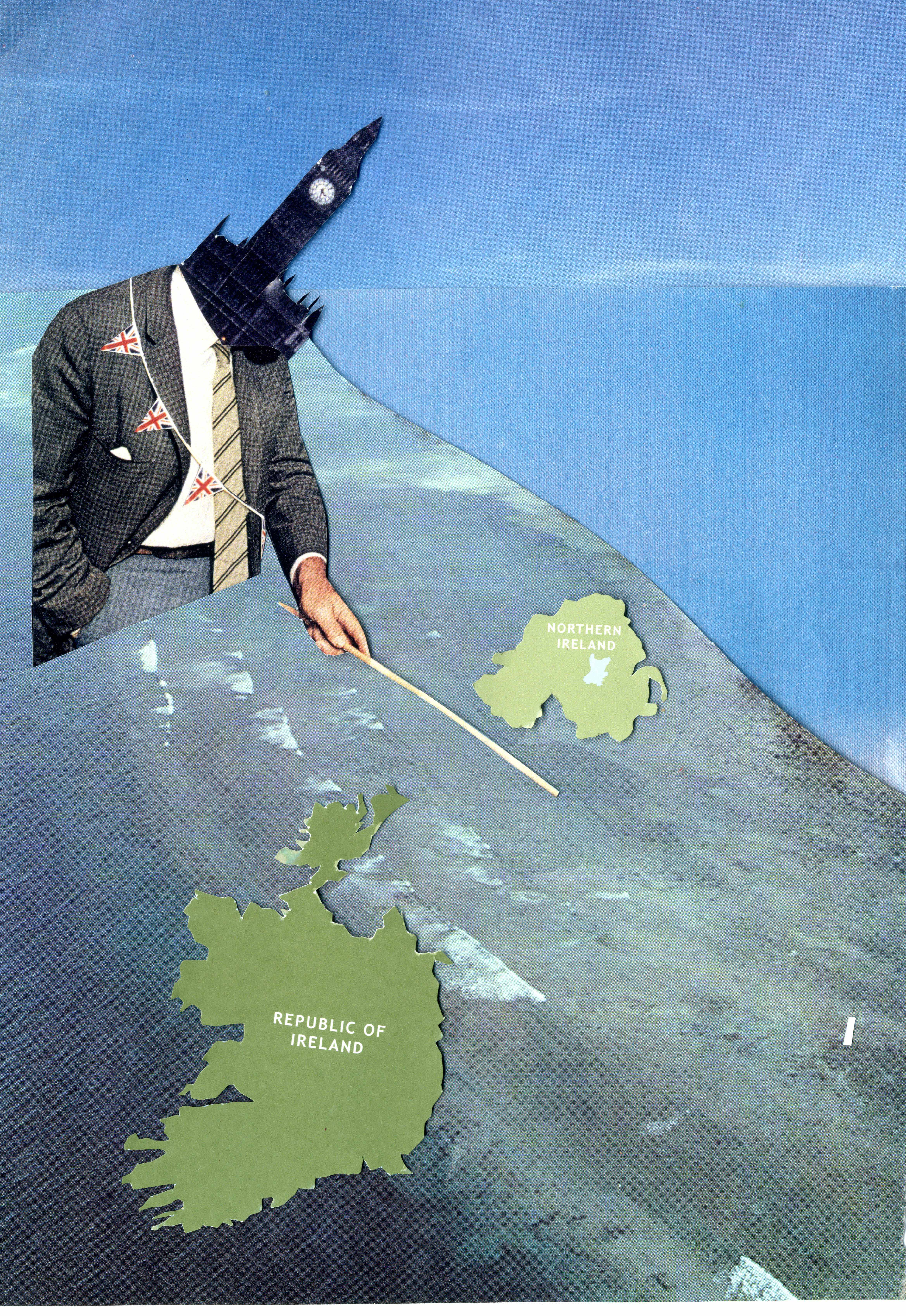
Meanwhile, foreseeing some of the problems that will arise for Irish citizens post-Brexit, the Republic of Ireland has made efforts to protect its interests during withdrawal negotiations with the UK and the EU, insisting that all agreements concerning Northern Ireland be legally binding. After all, the absence of a legal dispute resolution mechanism has imperiled Good Friday and caused many of the problems DeSouza—and soon all other Irish citizens in the North—will face.

Such measures have been an object of scorn by the Tory right, which at times have come across as if they see the island of Ireland as a backwoods former colony that exists solely to be utilized at moments of political expediency. In October last year, The Spectator accused the EU of “[using] Ireland to take control of Brexit.” Then in December, the Tory MP Priti Patel suggested threatening Ireland with halting imports, which would lead to food shortages, for not complying during negotiations with a former colonial power responsible for a famine that killed more than 1 million people.

For the Irish government, the most dangerous problem associated with Northern Ireland leaving the EU and entering a jurisdiction completely different from the Republic of Ireland is that such an event almost certainly necessitates the erection of a hard border. Such a border is almost guaranteed to be attacked by dissident Republican paramilitaries, who reject the peace process and seek to reunite Ireland via armed struggle. They see the chaos of Brexit as another opportunity to further their ends.

For the Irish government, the most dangerous problem associated with Northern Ireland leaving the EU and entering a jurisdiction completely different from the Republic of Ireland is that such an event almost certainly necessitates the erection of a hard border.

“I’m against anybody shooting anybody or at anything, but history tells us—including very recent history—that it only takes half a dozen people [to start a conflict]. … How many people were involved in the operation that killed Lyra McKee? Five? Six? That’s all it would take,” said Eamonn McCann, a lifelong civil rights activist and socialist councilor for Derry City and Strabane District Council. McKee, a 29-year-old LGBTQ rights campaigner, journalist, and author, was murdered last April by the so-called New IRA, the largest and most active dissident Republican group currently in Northern Ireland. She had been covering a riot in the Creggan area of County Derry commemorating the 1916 Easter Rising (an armed rebellion against British rule in Ireland) and was caught in the crossfire when a gunman fired recklessly at the police.

“If somebody shoots at a customs post, somebody’s gonna have to go and guard that customs post. And who’s gonna stay there? Who’s gonna do that? The police in the North? I don’t think so!” McCann added. “At one point they talked about bringing over 4,000 customs officers from England. … How much money would they have to pay any sensible person to come over from Scunthorpe or Taunton or somewhere in England and stand on the Irish border? You won’t get them to do it; the thing’s unworkable!”

The uncertainty of Brexit is changing the political conditions on the island of Ireland. Reunification—once a pipe dream for Irish Republicans—is now being contemplated as a potential political reality in unprecedented ways. Under the provisions of Good Friday, a border poll can be called if it seems likely that a majority would support a United Ireland.

Support for such a move is increasing: A survey published in late May by the Republic of Ireland’s national public service broadcaster, Raidió Teilifís Éireann, found that 65 percent of people supported reunification; while a YouGov poll of the Tory party undertaken in June found that 59 percent of members are willing to see Northern Ireland leave the UK if it means the delivery of Brexit. Faced with a ruling party that seems to care little if Northern Ireland leaves the United Kingdom completely, middle-class unionists—who are primarily concerned with the economy—are beginning to see a United Ireland in a favorable new light.

Post-Brexit referendum, it is clear that Britain’s decision to leave the EU will be a legal, economic, and constitutional palimpsest over an already dysfunctional Northern Ireland, the full effects of which no one can predict. As Belfast’s well-being remains intertwined with the results of London’s ongoing negotiations—both with itself and the EU—Brexiteers are openly seeking to impose their own worst fear upon Northern Ireland: a destiny shaped by capricious and volatile external forces.

If you want more border stories, check out this additional package which explores how the borders that divide and surround Europe affect the lives of the people living near them.


from VICE https://ift.tt/2ZnwCvf
via cheap web hosting

Floods Nearly Wiped This Iowa Town Off the Map. It May Never Come Back.

PACIFIC JUNCTION, Iowa — When the floodwaters receded in Pacific Junction in March, you could see two striking things: cornstalks washed up on the roofs of houses and rotting catfish strewn across the fields.

The view is hardly better today.

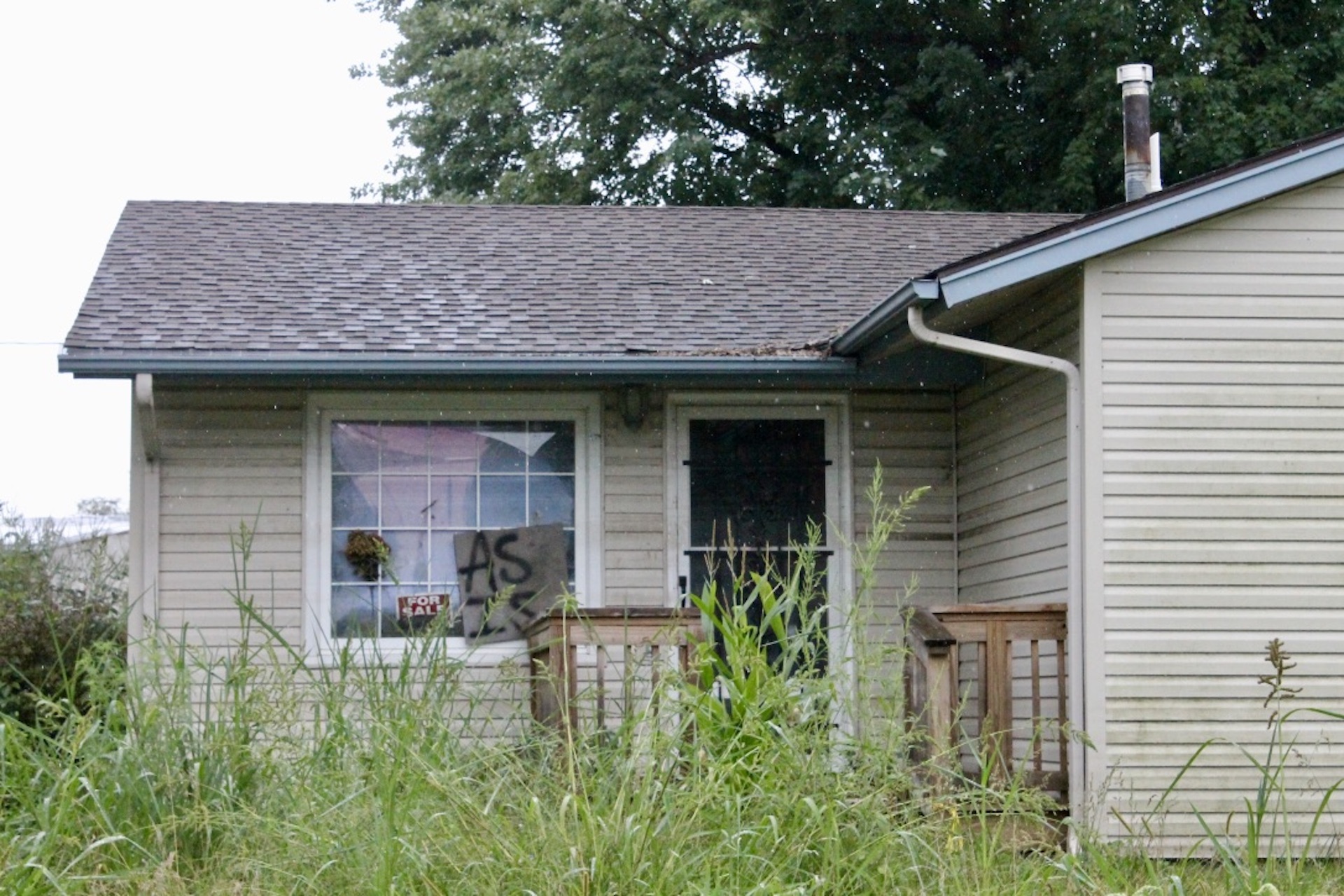
Beige port-a-potties dot the intersections of residential streets, where unmowed lawns grow unruly. In the windows of weathered houses where shiplap slides off the walls, cardboard “FOR SALE: AS IS” signs beg someone to buy.

One house wears green and yellow graffiti insulting both the Federal Emergency Management Agency and the Army Corps of Engineers: “ARMY CORPS THANK FOR HELP - 0. THANKS FOR HELP FEMA - 0. 0 + 0 = 00.”

Aside from the occasional appearance of a resident gathering garbage into piles outside her home, the town is dead quiet. The Missouri River, the source of all that trouble, is still flush with the top of the river bank.

It’s been five months since a historic flood leveled the roughly 400-person town, along with countless others situated along the Missouri River, in states like Nebraska, Missouri, Kansas, and Iowa. Nearly ten-foot water surges swept miles inland, washing through every home in Pacific Junction.

Aerial images of the region showed staggering loss: century-old farms destroyed, thousands of livestock drowned, miles of highways submerged and levees destroyed. Forced to evacuate nearly overnight, residents of Pacific Junction couldn’t access their homes for weeks after the flood, which hit with over a month left in the school year.

All told, the disaster will cost at least $1.6 billion in Iowa alone.

But now that the hemorrhaging has stopped, the real work begins. Staring down tens or possibly hundreds of thousands of dollars in repairs, the local residents –– some of whom have known no other home –– now have to decide whether to rebuild again.

Most think it’s not worth it.

1567115329678-pacific-junction-iowa-4
Some Pacific Junction residents abandoned their homes wholesale in the wake of the disaster, buying properties in other cities or staying with family. (Photo: Morgan Baskin/VICE News)

Hundreds in the town have demanded that city officials sign off on using emergency assistance funds from FEMA to provide them with buyouts, which would allow the city to purchase residents’ homes at their assessed value.

It gives residents a way to recoup the value of their house and have some money to buy or rent elsewhere: While FEMA offers some flood victims small grants of up to $34,900 to help repair damage to their homes, that amount isn’t nearly enough to rebuild from the ground up. And though the Small Business Association allowed residents to apply for low-interest loans up to $200,000, that forces people to take on a mountain of debt.

But the effort to secure buyouts has caused a rift between those who want to leave and those who’ve decided to stay — some of whom view the departed as traitors for abandoning the town.

“If FEMA comes in and says, ‘Here's your $30,000,’ and they leave and they go somewhere else, and they don't rebuild, [their homes] turn to green space. Forever. Deeded back to the county to mow. Well, that’s pretty much going to wipe out the entire city,” Devin Embray, president of the Mills County Economic Development Foundation and the superintendent of the area school district, told VICE News in his Glenwood, Iowa, office.

That’s because federal statutes mandate that any city conducting buyouts for disaster relief with FEMA money have to demolish the properties they acquire, with the land they sit on used as open public space in perpetuity.

As climate change increases the likelihood that natural disasters will strike, a number of cities have taken advantage of FEMA’s buyback programs — one of which allows jurisdictions in flood-prone areas to prevent widespread damage by buying properties before a disaster hits.

Nashville has been doing it for decades: Officials there have proactively purchased some 400 homes and lots in recent years, spending more than $43 million. Even Nebraska, which faces close to $1.5 billion in recovery costs from flooding this spring, avoided damage to some smaller towns close to the river where officials bought homes that had flooded repeatedly.

FEMA’s post-disaster buyback program, though, is its longest-running and most successful. The agency funded more than 40,000 individual buyouts between 1989 and 2017, many of those in Iowa.

A spokesperson for FEMA told VICE News that the agency has disbursed nearly $27 million since 2010 to help 30 cities in Iowa buy disaster-prone properties, including in Des Moines, Dubuque, Cedar Rapids, and Iowa City.

“Buyouts are a smart option if your goal is to eliminate flood damages,” says Rob Moore, a senior policy analyst at the Natural Resources Defense Council. “There’s one way to guarantee flood damage will never happen on a property again, and that’s to make sure there’s nothing on the property that can be damaged.”

Communities in Southwest Iowa, where Pacific Junction sits, have long been sensitive to the precarity of their location. In nearby Hamburg, a town roughly triple the size of Pacific Junction, residents have lobbied lawmakers for years to make their levees stronger and higher, to no avail.

But Pacific Junction has never been forced to confront the prospect of offering buyouts — for decades, levees and raised railroad tracks on nearly every side of the town prevented major flooding before.

And local officials aren’t eager to offer them. Buyouts would, essentially, erase the city lot by lot.

“The city does not want buyouts, because then the city’s gone,” says 45-year-old Jamie Cheyney, a healthcare worker whose home just outside the Pacific Junction city limits was destroyed by the flood. “But these people have nowhere to go. Our property is never going to be worth anything again. I doubt anybody will buy a house in PJ again.”

Flood-relief meetings have devolved into shouting matches, Cheney says, with people demanding concrete answers about if or when they’ll receive a buyout, and accusing city officials of withholding information.

Moore tells VICE News that FEMA-financed buyout projects are notorious for taking years to complete –– with new NRDC research showing that some can take up to five years. “Nobody wins the way we do it now,” he says.

Fran Parr, a civil engineer and longtime Pacific Junction resident, is more blunt: “It really is a shit show, you know?”

1567115544843-pacific-juction-iowa-3
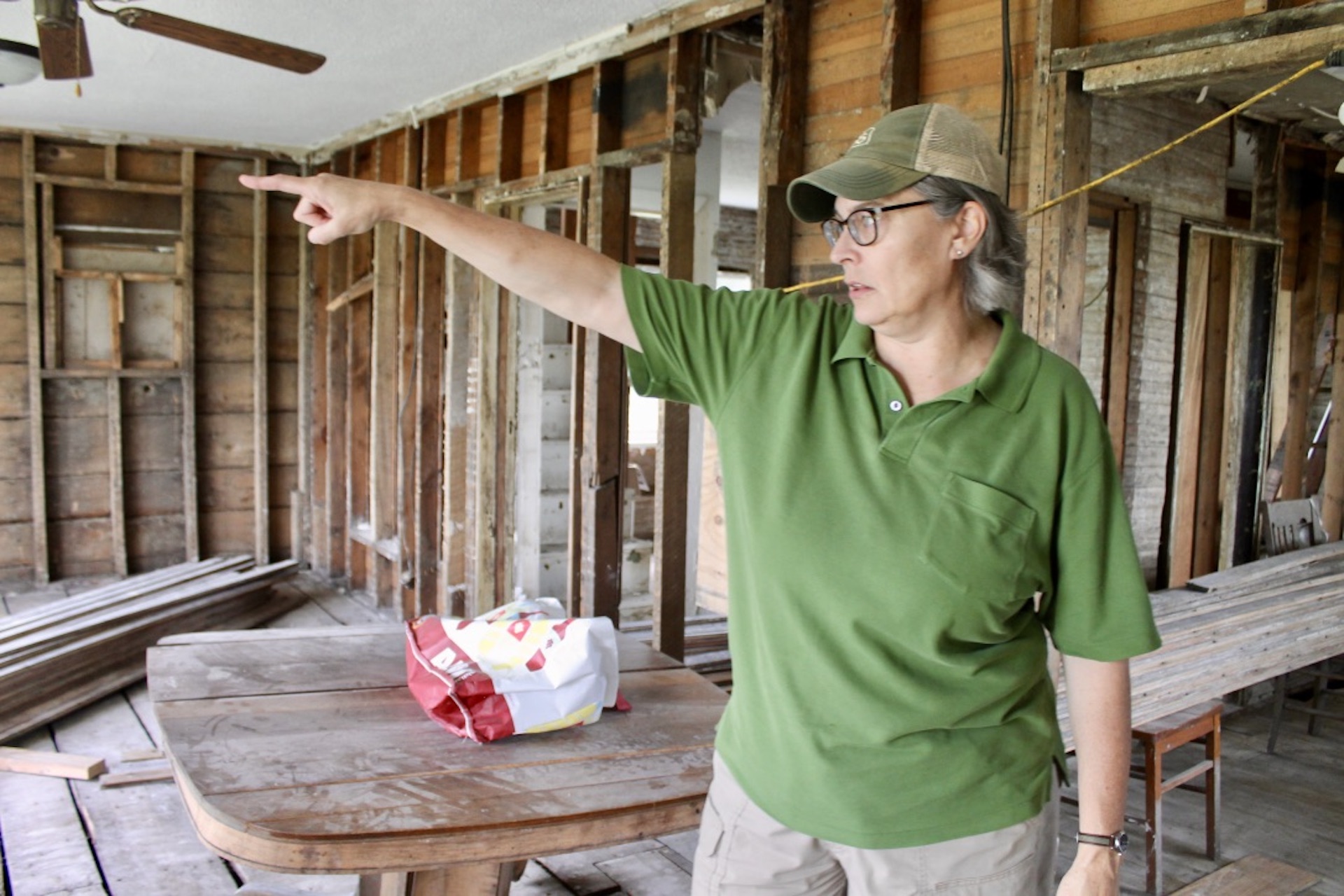
Fran Parr surveys the flood damage in her decades-old Pacific Junction home. (Photo: Morgan Baskin/VICE News)

‘This is survival’

Founded in 1871 by the Burlington & Missouri River Railroad as a freight transit hub for Mills County, Pacific Junction enjoyed decades of relative prosperity before its growth peaked at the beginning of the 20th century.

But its population has nearly halved since then, and the town’s wealth has dwindled.

Today, it’s one of the poorer towns in the area. Berkshire Hathaway estimates that the median home value is $70,000, about $50,000 lower than the county average. The vast majority of people there own their homes. There’s no full-service restaurant, no supermarket, no movie theater.

“It wasn’t, like, a prosperous community to begin with,” Cheyney says. “These are people who don’t have the money to go somewhere else.”

It has also, historically, been safe from flooding — the town had never before seen a flood like the one that destroyed it this spring.

Pacific Junction Mayor Andy Young, who has lived in the town for over five decades, told a local outlet in April that “never in my lifetime” did he expect a disaster of this magnitude. The closest the town had come to flooding was in 1993, when it experienced some “seep,” or water from the river basin that pushes up through the ground and creates marsh-like conditions.

But over the last year, the region saw a confluence of extreme weather conditions that increased the likelihood of flooding. Flooding in the fall of 2018 saturated soil in the ground, while heavy snows last winter blanketed, then froze, the water. When higher-than-average rainfall hit the area in the spring along with warm air that loosened it all, the snowmelt caused the river basin to overflow.

And a levee failure southwest of Pacific Junction forced the Missouri River to backfill, pushing water north and flooding the town.

Cheyney’s hundred-year-old home once belonged to her grandmother, and she’s lived there off and on since high school. It’s where the family celebrated Christmas every year, and when her grandma got too old to cook for the holiday, Cheyney took over.

She invited friends over for vacation, had bonfires in the summer, camped in the timber, and went mushroom hunting; she sank all of her money into refurbishing the house. She installed a new roof, windows, and flooring; she painted the exterior. She’d planned on redoing the kitchen.

“I thought I was going to live there forever,” Cheyney says. “Thank god I didn’t have that finished. Everything just went down the drain.”

Cheyey didn’t have access to the house for three weeks after the flood, and when she got back, she found that she’d lost everything. All of her belongings were covered in sewage, thanks to a treatment plant in Omaha whose contents leached into the floodwater.

So Cheney took her pets and moved into the guest room of her father’s home in the neighboring town of Glenwood.

The rest of Pacific Junction was also left to scatter. Dozens decamped to other towns, driving down vacancy rates in those rental markets, or to other states. Some moved in with friends and family; other families are sharing hotel rooms in adjacent towns. Some are living in campers by the river.

“I don’t know what’s going to happen if these people can’t find housing before the winter,” Cheyney says of her neighbors. “You can’t live in a camper, in the Midwest, in the winter.”

Other people skipped town in a truer sense, buying property in another area (“before their credit goes south,” Parr says) and refusing to pay the mortgage on their homes in Pacific Junction — or flood insurance that’s likely to spike into the thousands.

Though the Pacific Junction residents who have remained in the area have been vocal about wanting buyouts, they can’t do it alone. Local officials have to request FEMA mitigation funds from the state in order to purchase flooded properties. State officials then review those requests, as does FEMA.

Parr says she led the push to urge city and county officials to begin the buyout process, writing to the county’s board of supervisors with signatures from residents. About 40 people signed on initially, though Parr estimates that, over time, roughly 80 percent of the town expressed interest in taking a buyout if offered one.

But it’s been mostly radio silence from lawmakers, residents say.

“They haven't been transparent. I find that a huge source of frustration, a huge source of frustration. Nobody knows what the status is,” Parr says. “Some people who are involved at the periphery come in and say, ‘Well, you know, it’s government, it's going to take a while.’ I don't give a shit. I went back and actually pulled out some of the steps from prior disasters, [and] we're not rewriting this fucking playbook. It's out there, you know?”

1567115635807-pacific-junction-iowa-1
Parr has five-year-old twins in pre-K. On the summer afternoons they spent playing outside with their dogs, she says, “those are bygone days.” (Photo: Morgan Baskin/VICE News)

Neither the president nor the vice president of the Mills County Board of Supervisors returned VICE News’ request for comment.

“This is survival for people,” Cheyney says. “People are paying mortgages on houses down there that need to be torn down. And then they’re trying to live as well.” She calls the buyout discussions “a nightmare.”

Because the entire town was under mandatory evacuation orders for 25 days, there’s been no physical, central meeting place for residents, adding to their sense of isolation. Emergency response officials have had to rely on Facebook to communicate with flood victims.

While county officials held sporadic meetings this summer to update residents about recovery efforts, Cheyney says they mostly turned into screaming matches. “It was too depressing, so I stopped going,” she says. “Some people were just angry, and they wanted someone to yell at. Then there was the big city-versus-county [fight]. PJ residents felt like they weren’t getting information from the city council that county residents were getting.”

And then there’s the matter of the levees: The Army Corps of Engineers now has to fix 280 miles of them that were breached or compromised this spring between Council Bluffs, Iowa, and the Missouri state line, a stretch that runs around Pacific Junction. That’ll take many years and billions of dollars, so people who live along the river now have to do so with the knowledge that another season of heavy rain could result in more flooding.

Cheyney, for her part, is weighing a move to Colorado, where her job is based. Rebuilding her house would require borrowing tens of thousands of dollars, at a minimum, to ship in enough dirt to keep the house above the water-table line. She’d need to replace the electrical wiring and all of the walls.

“It’s just cost-prohibitive,” she says. “It’s basically like building from the ground up.”

She recently paid $9,000 to demolish her grandmother’s home.

‘They just walked away from it’

If you tell Andy Young you want a buyout, don’t expect a warm response.

Drill in hand, the lithe Pacific Junction mayor is skulking through the shell of his daughter’s living room. Across the room, a construction crew is heating up Mexican food in a small microwave.

“I don’t do the dog-and-pony show,” Young said when VICE News knocked on the door.

But for the last several months, he’s had to, with presidential candidate after presidential candidate passing through town –– usually on Parr’s arm, who’s a Democrat –– to take a look at how climate change will damage America’s small towns. He’s played host to the governor, and senators, and the county’s emergency management team.

He’s a good spokesman for the town, because he’s in the minority of residents with no plans of leaving. He’s helping construction work along in his daughter’s home, and she’ll likely be the first resident to move back into town.

1567115723189-pacfic-junction-iowa-2
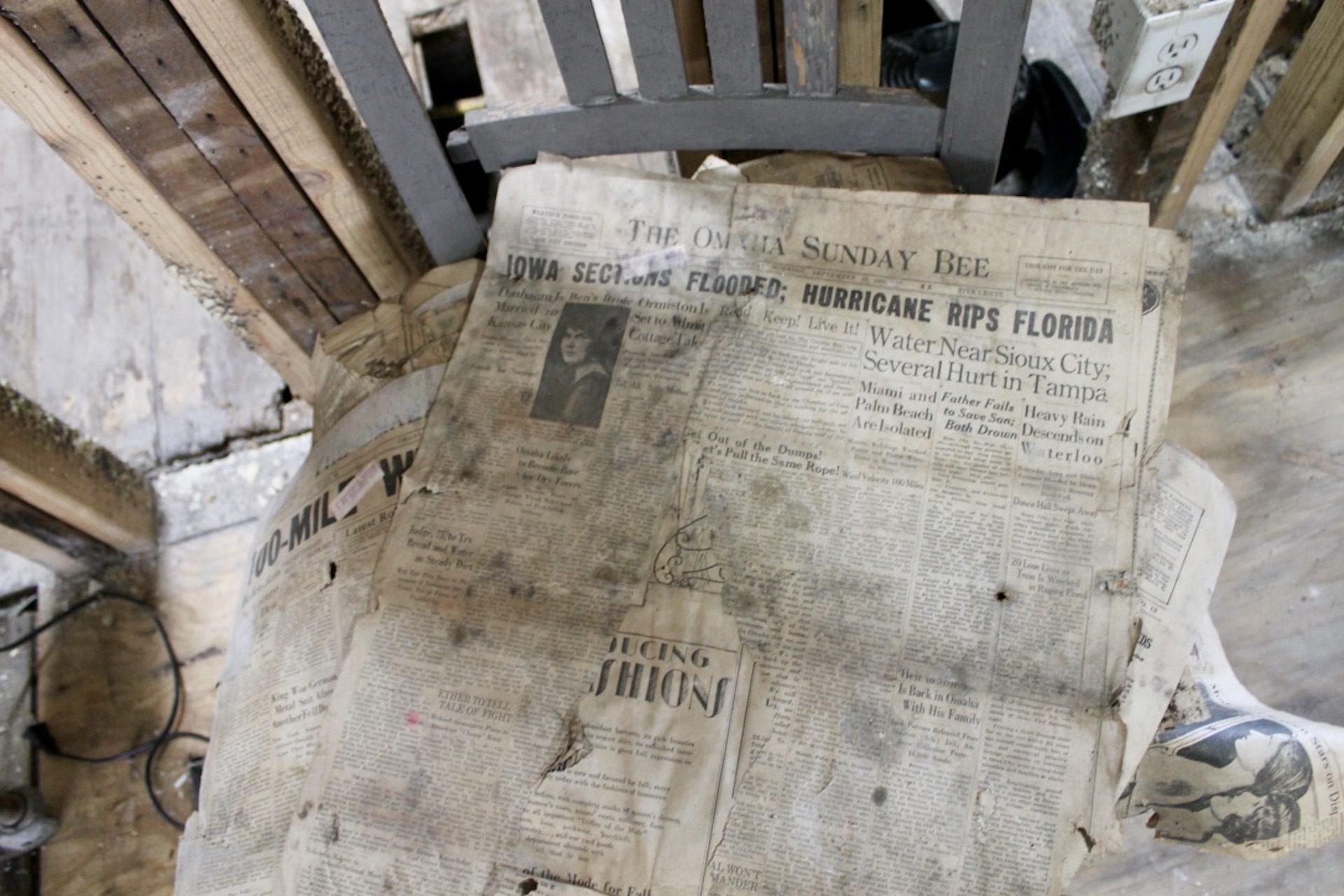
After contractors ripped up some of the baseboards of her home, Parr found an old newspaper. On the front page was a story about flooding in Iowa. (Photo: Morgan Baskin/VICE News)

The mayor is opposed to buyouts in part because of the cost –– while FEMA funds 75 percent of the cost, the town has to pony up 15 percent of the remaining 25. "We're pretty much devastated anyway,” Young told an Omaha ABC affiliate in May. “To come up with 15 percent of however many buyouts –– it'd be astronomical for us.”

But it’s also part pride. Young grew up in Pacific Junction, raised his kids there, built a life.

He takes a swipe at Parr for having a second home, implying that she’s not emotionally invested in Pacific Junction because she has another place to live. (“She comes up here on the weekend and plays farmer,” he cracks.) And he rattles off a list of the people who have begun work on their homes again, and where in town they live.

Young also tells Parr offhand during a brief conversation at his daughter’s home that the city will start sending letters to people who refuse to mow their lawns, and levy fines against them –– a jab at people looking for buyouts who’ve bought homes elsewhere and skipped town.

“People who have said, ‘I'm not going to rebuild’ have let their yards go. And there's people in town who are like, ‘You can't do that’,” she laughs. “Over yards. There was a thread [on Facebook] that a week ago blew up because people weren't mowing their yards.”

But yards, too, are a matter of pride. “They just walked away from it,” Young says. “And they don’t care what it left. But it’s still their property. They’re still responsible for it.”

‘Wiping PJ off the face of the Earth’

The land around the Parrs’ home produced vegetation as far as the eye could see: apples, tomatoes, corn, sunflowers, wildflowers.

She says she’d work at a big table in the front of her home, the dogs lounging on chairs by her side. Her twin sons, now about to start pre-K, would run under the towering trees outside. “Those are bygone days,” she says.

“Our day-to-day is kind of a –– I wouldn't call it entirely a sad existence. We have it better than most others. But it's kind of –– to me, it's not really living,” she says, icy blue eyes glittering. “It's just, you know, you feel like you’ve got this albatross around your neck.”

Coping with the staggering loss, she says, has been overwhelming.

“What I'm genuinely worried about right now is people's mental health,” Parr says. “I had a crack here about about a month ago. I'm like, I can't deal with it. So I was kind of having a bad moment.”

She reached out to friends and neighbors on Facebook, encouraging them to seek help and to not ignore their sadness.

She says her “true concern” is that flood victims –– particularly farmers who have lost their life’s work –– will consider suicide, and notes that there are only two mental health professionals working in the area, one of whom does not work full-time.

Providers of mental health care in areas of rural Iowa hit hardest by the flooding say they’ve had to turn people away because there aren’t enough available appointments. And Iowa Public Radio reported last month that the U.S. Health Resources and Services Administration identified 50 of the 59 Iowa counties designated as disaster areas as having inadequate mental health care.

Cheyney has also struggled with the enormity of her loss. “I have had friends tell me they’re worried about me, because I’m just kind of scattered now,” she says. “I think a lot of people are suffering, and they don’t know how to put it into words.”

The future they see for Pacific Junction is bleak. Both Parr and Cheyney anticipate bankruptcies in the town, noting that some farms that have operated for generations were destroyed by the flooding. Love’s, a truck stop and convenience store, has already shuttered a location there. A John Deere location has stopped stocking its store in Pacific Junction, Parr says. And a BP has closed, too, rumors spreading among residents that it won’t reopen until the Army Corps finishes fixing the levees.

“What really truly should happen is a private investor should come in and say, I'll buy PJ for a million dollars,” district superintendent Embray says, “and dole out the money just like FEMA would.” That person would then be able to later sell the land, allowing people to build homes again, he says.

“That's what the push is: Hey, can we look at PJ differently?” Embray continues. “Can we offer this assistance in a different way, that would allow us to rebuild PJ? Because otherwise, you're basically telling us, you're wiping PJ off the face of the Earth.”

On her front porch, on a rainy Wednesday in late August, Parr surveys the landscape around her house as a light drizzle begins to fall over the fields. A couple of small floor fans whir inside.

“If you were standing here before, you would hear kids, you would hear the lawn mower, you would hear dogs barking. You know? Now you're hearing the fans and the crickets,” Parr says, hands on her hips, baseball cap low over her eyes. “It's, you know, to me, it's dead. I don't know what else to say about it.”

Cover: Floodwaters surround a farmstead in this aerial photograph over Pacific Junction, Iowa, U.S., on Saturday, March 23, 2019. (Photo: Daniel Acker/Bloomberg via Getty Images)


from VICE https://ift.tt/30MEeE7
via cheap web hosting

In the Future, Your Watch Will Tell You if You’re Wasted

Soon, you may no longer have to rely on gazing at the bathroom mirror in blurred horror to gauge how drunk you are. Scientists are developing a wearable wrist device for tracking inebriation that’s showing promise. Researchers at the University of Illinois at Urbana-Champaign recently put the wearables to the test and found that the gadgets do a pretty solid job of measuring how much alcohol someone drank, along with how intoxicated they are. This sort of device could help people make smarter decisions about when to stop drinking and when definitely to not get behind the wheel, according to a new study published today in the journal Alcoholism: Clinical & Experimental Research.

The wristband’s sensors collect data on raw transdermal alcohol concentration (TAC), or how much ethanol is being secreted through the sweat on your skin. The data shoot off to an app via Bluetooth and can be integrated into Apple Watches by swapping out their bands for ones with sensors. The info is digested into a graph that either trends upward or downward, depending on how much booze is in your system.

There are a few kinks to work out. While the sensors can tell if someone’s getting drunker, as of now, TAC is not the strongest, most concrete indication of intoxication. The biggest question researchers are trying to unpack is whether the data collected through the skin can be translated into blood alcohol content (BAC)—the amount of alcohol in a person’s bloodstream. The most precise way to measure how much alcohol is in your body is to look at your BAC through either a breathalyzer, blood, or urine test. While TAC doesn’t perfectly reflect BAC levels, past evidence has shown it is closely in line with it—and because testing through the skin is continuous and also much less invasive than a blood or urine test, many experts think transdermal alcohol testing could be used as a viable supplement to BAC readings, and eventually be a substitute for breathalyzer tests.

There are also a handful of external factors that can interfere with how effectively the skin sensors measure inebriation, including how much a person is sweating, room temperature, humidity. There is also a notable lag time between one’s last drink and when ethanol’s excreted through the skin—on average, the wristband’s readings were about 24 minutes behind the breathalyzer tests.

Still, scientists are excited about these sensors. “The question is, can we process that information in a way that does give us a much more accurate indication of BAC?” study author Catharine Fairbairn, PhD, an assistant professor of psychology at the University of Illinois at Urbana-Champaign, told VICE. Fairbairn noted it's a challenge, but it’s doable—as long as researchers can find a way to account for all the external factors when processing TAC to BAC.

Given that binge drinking has been consistently on the rise in recent years and that driving under the influence is very much a huge problem, getting closer to a simple wearable that can tell us when we're too drunk to function still seems more promising than the bathroom-mirror system—unless, of course, you're too drunk to use a wearable in the first place.

Sign up for our newsletter to get the best of VICE delivered to your inbox daily.


from VICE https://ift.tt/2HzqJA8
via cheap web hosting

German Neo-Nazis Are Doxxing Journalists on 'Enemy' Lists: 'We Will Get You All'

German journalists are calling on the government to do more to protect them from right-wing extremists, after reporters’ names have turned up neo-Nazi “enemy lists.”

German police raids on domestic far-right terror networks in recent years have uncovered lists containing more than 35,000 names of politicians, activists, and journalists deemed to be “enemies” of their cause. The lists have names such as “We will get you all”; some have featured the targets’ phone numbers and home addresses.

The groups named by the right-wing extremists say the authorities have failed to take the threat against them seriously enough. Many people were informed that their names were on an “enemy” list not by the police, but by third parties such as antifa groups. Others complain that the police informed them, but failed to provide any protection in response.

In June, a right-wing extremist assassinated a German politician who was also named on an enemy list. In response, a group of six German journalist organizations have sent an open letter to Interior Minister Horst Seehofer demanding the government do more to guarantee journalists’ safety.

READ: Germany’s worst fear just happened: A far-right assassination of a politician

“Our concern is that there are death lists out there made by different far-right groups, that have featured the names of journalists,” said Sheila Mysorekar, chair of the New German Media Professionals group, which wrote the letter.

The recent history of far-right political violence in Germany had shown that “it’s not as if this is something harmless and nothing will come of this,” she told VICE News.

Germany has been facing a rising tide of right-wing extremism since Chancellor Angela Merkel welcomed about a million asylum seekers, most of them Muslims, into the country during the height of the European migrant crisis.

The backlash to that decision has fuelled the rise of right-wing populist political parties like the Alternative for Germany party. It has also resulted in an explosion of far-right political violence, with extremists stabbing politicians and carrying out acts of terrorism, such as a bombing campaign in the town of Freital.

In June, the head of Germany’s domestic intelligence agency, Thomas Haldenwang, said that there were 12,700 German right-wing extremists who were prepared to use violence, “and it’s difficult to have an eye on them all.”

READ: A far-right terror group’s bombing campaign in a small German town

Sebastian Huld, spokesman for the German Federation of Journalists, told VICE News that, along with politicians and left-wing activists, journalists have emerged as a prime target for right-wing extremists, who have revived the Nazi-era term “Lügenpresse” (lying press) as a routine term of abuse against the media.

“They think there’s a conspiracy between the establishment politicians and the establishment media,” he said.

“We’re also a threat to them because we write about the truth — we write about their hidden activities and hidden goals,” Huld said, adding that journalists were sounding the alarm about the dangers of the rising far-right long before the authorities started taking notice.

READ: German neo-Nazis are threatening more killings after the murder of a politician

Huld said German journalists face a much more dangerous working environment due to threats from far-right extremists, with some reporters routinely hiring private security to report on nationalist demonstrations. Abuse and threats — including death threats — have become a routine part of their professional existence.

Yet journalists say the response from authorities has been piecemeal and inadequate, with reporters largely kept in the dark about the potential threat against them. While in the state of Bavaria, individuals were swiftly informed that they had appeared on the enemy lists, in other parts of the country, authorities have refused to confirm whether individuals appeared on the lists, citing that the matter was still under investigation.

READ: How the far-right is weaponizing Nazi history in Germany

Interior Minister Seehofer has yet to respond to the open letter, but the federal police say that simply being named on one of the lists does not mean officers will treat the matter as a threat. To journalists, that’s unsatisfactory, given the now deadly violence being levelled at those on the lists.

“In one case, where a journalist was informed he was on a list, police advised him to ‘keep a low profile’,” said Huld.

“That’s a huge concern — keeping a low profile is exactly the opposite of what we do as journalists. We’re pretty exposed in our daily work.”

READ: German extremists are threatening to burn down kindergartens for taking pork of the menu

Journalists aren’t the only group to have voiced concern about the police approach to the enemy lists. Last year, German MP Martina Renner, a lawmaker for the left-wing Die Linke party, said it was “completely absurd” that only a small number of the thousands on the lists had been notified that they were potential targets. Her office told VICE News it was a sign that the authorities did not take the threat of far-right terrorism seriously enough.

READ: German right-wing extremists are drawing up ‘enemy lists’

Anti-racism organization the Amadeu Antonio Foundation was underwhelmed by the police’s response when it was informed that its Berlin headquarters, and a member of its board, had been identified as potential targets when police uncovered a far-right terror cell in the German military in 2017.

“The information was basically, ‘You are on that list,’ full stop,” foundation spokeswoman Sofia Vester told VICE News last year. “It wasn’t very productive and wasn’t linked to any security measures we should be taking. We were offered no additional assistance.”

Cover: A man participates in a demonstration of the German far-right party 'Die Rechte' in Ingelheim, Germany, Saturday, April 20, 2019. (Boris Roessler/dpa via AP)


from VICE https://ift.tt/2LbEQho
via cheap web hosting

Netflix's 'Styling Hollywood' Is a New Kind of Gay Love Story

Netflix's new series Styling Hollywood follows the happily married couple Jason Bolden and Adair Curtis on their adventures leading a joint business, JSN Studios, where Bolden styles A-list celebrities and Curtis is an interior designer. Their electric personalities, combined with candid appearances from celebrities like Ava DuVernay and Sanaa Lathan, are entertaining on their own. But the show is also strikingly honest about the obstacles the couple faces in their professional and personal lives, making their high-profile world feel surprisingly three-dimensional. Styling Hollywood's candid approach makes it a refreshing window into the worlds of Hollywood stylists and Black celebrities, as well as an upbeat depiction of Black gay life.

We caught up with Bolden and Curtis to hear more about why they decided to let audiences in on their lives and what they hope viewers get out of the show.

VICE: Why did you decide to share your lifestyle on reality TV?

Bolden: We've been asked for years to expose our life, and let people get a window into what it's like to design and style and also have a fun happy marriage. But we never really found partners who we thought really got us, who could actually take care of us and be trusted. Then we sat down with Carlos King [executive producer of Styling Hollywood] and fell in love with him. We felt like he really got us, and he looked like us. We brought the idea to Netflix, they fell in love, and it's become a beautiful process.

You two seem to be so secure and celebrated in your identities compared to characters in popular coming-out movies. Was it a selling point for you to do the show, that you could expose people to this kind of post-coming-out lifestyle?

Bolden: It really sucks that people have to have the experience of not really being accepted by families and communities. We're really grateful to actually have family from day one to now who've always supported us. We come from this really amazing group of people who care about us. So we're really lucky in that sense. And it feels good to share a different story through the celebration and comfort of the show.

A number of TV shows about gay men seem to have a straight gaze to them, as if people or characters are performing gay stereotypes straight people want to see. But your show feels more like you're just living your lives. Did you intentionally want to make this a different kind of depiction?

Bolden: You have these images that are constantly pushed on us as gay men about what [we] look like. But as humans, we have all these different layers. [This show is] an opportunity to see another layer, especially when it comes to being two Black gay men. There are so many public examples of white gay couples who have these shiny sparkly lives and there's no chaos. We never see that when it comes to two Black gay men. Looking back, we see this show as an amazing opportunity to amplify the Black gay community. But we didn't have to worry too much about breaking stereotypes, because this show is really us, through and through, any day of the week. There are loads of stereotypes out there, but the only one we really fall into is being happy and joyful, and that's what we want to focus on.

Why do you think it has been so rare to see the world of Black styling on TV?

Bolden: For a very long time people didn't think dressing Black celebrities was important, but now they're seeing [they were] actually so wrong. This is a big business. [Black celebrities and their stylists] are the people who are shifting culture. All these fashion houses are basing things off of the fashion of these Black and brown women and men. How do we not show [their contributions] and only promote images of brown people on TV that are malicious and awful? For me, I think a big reason [we haven't seen Black styling highlighted on TV] stems from that narrow idea of who Black people are. If you're thinking that way, there's no possibility that Black people can be glamorous.

What do you think Black stylists in particular bring to the process of dressing celebrities?

Bolden: Well clothes are clothes, and people are people. There shouldn't be a real separation of who can dress who, because ultimately, it's just clothes, and we should let the best person win. There are situations where I can chat [with Black celebrities] and share experiences—about what it feels like to walk into a store and be ignored, for example. But mainly, Black stylists have never been recognized. It's always been my white counterparts who have been fully celebrated and pushed to the forefront. We're so lucky that now things are changing, thanks to the help of some of our amazing clients who are screaming our names and thanking us in public.

Your show gets surprisingly candid about the behind-the-scenes or internal drama of your business, and how you work things out. Is part of your mission to show people, maybe young Black people, how they could operate a similar business, or inspire them to see themselves doing it?

Curtis: That's definitely something we always try to do—even if a small touch of something that we did on the show inspires you to become a celebrity stylist, or really anything you want to be, because the options are limitless. I think entrepreneurship today is glamorized, so a lot of people don't understand or see the struggle of what it takes to be an entrepreneur. But our business is a real business. We're not doing this just for the show. So everything you saw is real. We couldn't script that if we wanted to. We struggle. We have to deal with managing the different people in your business who don't necessarily have the same goals as you. So yeah, that was intentional to show, but it's also all just real life.

What have you learned about the essence of Black girl magic working with your clients?

Bolden: I always go back to resilience. All of [our clients] have this drive to shift perspectives, whether it's through the way they want to translate a dress on the red carpet or how they want to change the way people receive other humans on the planet. That is some powerful shit. Shifting this big ass planet? That's amazing.

Sign up for our newsletter to get the best of VICE delivered to your inbox daily.

Follow Taylor Hosking on Twitter and Instagram.


from VICE https://ift.tt/30Op3Kw
via cheap web hosting

How to Cancel Spotify Premium

Welcome to CANCELED, Motherboard’s series of helpful guides on how to stop paying for the subscription services you probably signed up for years ago but don’t use (or feel guilty about using).

Spotify Premium, with more than 100 million subscribers, seems to have it all: no ads, the ability to download music and podcasts on-the-go, and an algorithm that pretty accurately guesses your taste in music.

Spotify works by collecting your data, which is what makes it so good at making customized playlists, but if you’re trying to protect your information, Spotify may not be the move for you. Also, streaming doesn’t benefit artists all that much. For each streamed song on Spotify, artists are paid $0.00397, falling behind Tidal and Apple Music’s per-stream payouts.

And so if you regret subscribing for whatever reason: Whether you don’t want to pay $10 a month to not own any music or you simply forgot to cancel before your free trial was up, here’s how to cancel your Spotify Premium subscription.

Cancelling through the website or desktop app

Unfortunately, you can’t cancel your subscription through the iOS or Android app. You’ll have to crack open your laptop and log on to the website or desktop app.

The process is the same for both.

  • First, sign in to your account and head to your account page. It should look something like this:
1567111022360-SpotifyCancelImage1
  • To the left, there’s a sidebar menu. Click “Subscription”—it will take you to a page showing the type of subscription you have.
  • Scroll a bit and click on “Change or cancel.”
1567111055815-SpotifyCancelImage2
  • Verify that you want to cancel your Spotify Premium account by clicking “Cancel Premium.” Because two times isn’t enough, click “Yes, cancel.”
  • Your account page should now tell you when you’ll be returning to free Spotify.

Cancelling through a different service provider

If you got Spotify Premium through a different company (like through your phone or internet provider), you’re going to have to visit that company’s website to cancel. If you don’t remember who manages your subscription, head back to your account page and click on the subscription menu option on the left.

However, if it’s through your iTunes account, the process is much more complicated. Here are the steps to cancel subscriptions on an iPhone, iPad, or, God forbid, iPod Touch:

  1. Tap on Settings, then your name, and scroll down to iTunes & App Store
  2. Tap on your Apple ID at the top of the screen and view it. You might have to sign in (hopefully you remember your password!).
  3. Scroll down to Subscriptions, click on the Spotify Premium subscription and tap cancel.

Switching to a student discount

Okay, maybe you’re a college student and made the mistake of signing up for regular Spotify Premium. All you have to do is apply for the student discount. After Spotify and SheerID verifies that you’re a student, you’ll start paying $4.99 started the next billing period.

I cancelled Spotify Premium but I’m still being charged

It’s likely that you have multiple Spotify accounts, but just didn’t know it. There are two ways you can check: enter every email you have through Spotify’s password reset page or check Facebook’s apps and websites under settings. Then proceed with the normal cancellation process. Here’s a guide on how to unlink Spotify from your Facebook account, should you so desire.

I want to do things the old fashioned way

Print out this form and mail it. Or email it to breakup@spotify.com.


from VICE https://ift.tt/30Lqfys
via cheap web hosting

Apple Will Finally Sell iPhone Parts to Repair Shops But Not to You

After years of fighting independent repair, Apple is rolling out a program that will allow some independent companies to buy official parts, repair tools, and diagnostic services outside of the company’s limited “authorized” program. It’s a big win for the right to repair movement, but it doesn't mean that Apple will allow its customers to always repair the devices they own, and the program has shortcomings.

The “Independent Repair Provider Program” was first reported by Motherboard back in March, when it was being piloted by just a few independent repair professionals. Apple said in a blog post that the program will be rolled out more widely, and that anyone who has a repair shop in a “commercially zoned area” and is willing to become certified by Apple through a free program is eligible to apply.

This is great news on a few fronts: First, it illustrates that Apple is responding to pressure from the right to repair movement, which is trying to break repair monopolies at big tech companies through state-level legislation that would require companies to sell repair parts, make diagnostic software and repair tools available, and make repair guides available. Second, it will have the very real effect of making it easier for people to get their iPhones repaired in rural areas and countries without many Apple Stores.

1567109486045-Screen-Shot-2019-08-29-at-122213-PM
A price list obtained by Motherboard.

But Apple’s new program is far from what the right to repair movement has been asking for, and still allows the company to set the terms under which consumers can repair the devices they own. Apple isn’t going to begin selling parts to the general public, it’s not going to sell to people who repair phones out of their homes, and it’s only making the program available to people who meet specific requirements.

“It’s a direct reversal, but big questions remain,” Nathan Proctor, who is leading the right to repair efforts by consumer rights group US PIRG said. “There is a lot of ground between this and truly getting to decide who fixes our devices, but every step they take toward our requests for the right to repair show that our campaign is effective, and that Apple—or any other manufacturer—could easily comply.”

According to internal Apple documents and parts price lists obtained by Motherboard in March, Apple is also selling a limited number of parts. These include iPhone batteries, cameras, speakers, and displays. This means Apple isn’t going to allow independent repair professionals to do a wide variety of repairs (for example, as of October 2018, it wasn’t selling charging ports for iPhones, a part that is both easy to replace and commonly needs replacement on older iPhones.) According to the price list, Apple is only selling parts dating back to the iPhone 6S, which means older models might not be supported, either.

Buying these new parts from Apple is also still more expensive than buying original but refurbished parts, which are commonly used by independent repair companies. Because the parts are new, that makes sense, but experts in the right to repair world say that Apple is likely selling these parts for a profit, and for much more than refurbished original or aftermarket parts cost.

More expensive parts mean smaller profit margins for independent repair shops, which could disincentivize from using Apple's Independent Repair Provider Program. For example, in Apple's October 2018 price list, an iPhone XR replacement screen costs $222.27; an iPhone X replacement screen costs $303.05. iFixit is currently selling iPhone XR replacement screens for $99 and iPhone X replacement screens for $150 (wholesale prices through other vendors are even cheaper). An Apple representative told Motherboard those prices are no longer accurate but did not provide any information about current prices. Presumably, today's prices are lower because the iPhone XS, XR, and XS Max were new at the time.

1567109513164-Screen-Shot-2019-08-29-at-41026-PM

This means that repair shops will have to pass those costs onto customers. Finally, according to that price list, Apple isn’t currently providing a mechanism for independent repair people to “pair” certain parts with repaired phones. This means, for example, that home buttons and Face ID cameras can’t be replaced.

“They will be selling more parts at list prices, which is a profitable line of business,” Gay Gordon-Byrne, executive director of The Repair Association, which is pushing for right to repair laws, said. “They don’t allow a whole host of repairs other than replacing consumables. It also looks clear to me that since they won’t sell the ‘advanced’ tools needed to allow paired parts to work, they remain a fully functional repair and reuse monopoly.”


from VICE https://ift.tt/30MdjIC
via cheap web hosting